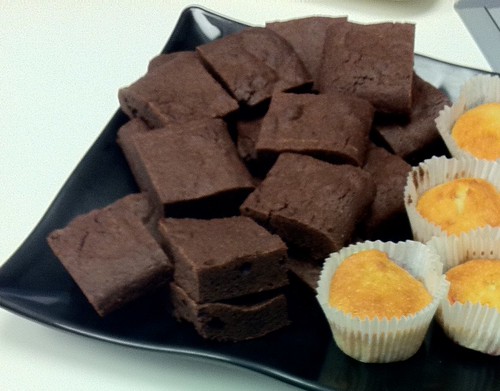
There’s something about pastry

Edd Kimber, a.k.a. @theboywhobakes linked to this article on twitter not once, but twice – and I’m very glad he did. It’s a fascinating article from the New Yorker about the evolution of the modern dessert, a “quest to find out what desserts really [are] and where they [are] going”.

It’s a great read, although leaves you wanting more detail in a number of places. However, I found the distinction between dessert and not dessert somewhat false. As the article describes, the line between the two is quite blurred, because the techniques straddle dessert and main course cooking, and sweet and savoury flavours can appear in both. Ultimately, the only good definition of dessert is that it comes at the end of the meal.

But for me, the more interesting separation is not about dessert, but about pastry. I found the most interesting part of the article Ferran Adria’s description of the two major revolutions in French cooking coming from chefs originally trained in pastry – Carême codifying French cuisine and Michel Guérard and nouvelle cuisine. I’ve always found it interesting that Gordon Ramsay trained in pastry as well, and his Just Desserts book is, I think, one of his better ones. Pastry, in this context means a set of techniques in manipulating flour, sugar, butter and eggs to create a set of new materials – a set of skills which perhaps can equip you to imagine a new type of cuisine.

I definitely prefer pastry, mostly baking, to cooking – something that’s very obvious from the archives of this blog. It is something that I have thought of as a bit of defect, and have tried to correct (at least on the blog). I have thought of myself as  preferring pastry because I have a sweet tooth, and when I was at cooking school, because it was a calmer task than line cooking. These preferences are part of it, but this article also starts to get at something else which marks pastry apart from the rest of cooking. It is learning the techniques you need, and understanding the science behind the transformations in baking that really fascinates me, and draws me back to repeat, refine, adapt and develop.

The idea of constructing something new – creating new textures and materials out of raw ingredients – is fascinating. This is what Alice Medrich calls ‘a basic wardrobe for designing desserts’ and the part that appeals to ‘the engineer and architect’ in her. Armed with these techniques, and the ratios that make them work, you can create anything you care to dream up.  And because these are confections, they lend themselves to imagination and creativity. There’s no ‘meat and two veg’ target to hit, no nutritional points to count, no need for ‘food as fuel’. It is pure escape, like couture, the concept car or the Turner prize. (High end dining occupies a similar place, regardless of the courses.)

Something I’ve done before is to map out techniques or recipes, to see how learning one can lead you on to the next. This seems to work particularly well for pastry, where the same few ingredients can be combined in a huge number of different ways.

This diagram is an illustration of where these techniques can take you. A diagram of how to navigate the materials and techniques, and what you can access with each of them. This is a start – I would like to develop this further. If you can see anything that’s missing, or have any good ideas on how it could be used or developed, please let me know.

What about you – do you prefer pastry or cookery – and do you know why?

2010 in review – year of chocolate, tortillas and courgettes

The WordPress fairies reminded me of the New Year by sending a little summary of how this blog fared in 2010. They offered to put it up as a post, but the stats don’t seem to tell the story of the year very well, so I’m going to have a go myself.

Mexico

The year kicked off in Mexico, where we went for a holiday in February while our back garden was being renovated.

It was a great break, and the best food was eaten on the beach, with pelicans diving in front of us. Tortillas for breakfast, lunch and dinner is a seriously underrated diet. When summer and my birthday arrived, I got hold of Thomasina Miers’ Mexican Food Made Simple and had a go at tacos at home. The main problem seems to be finding good tortillas in the UK – although apparently Thomasina is working on that problem too. I also bought masa harina this year, but haven’t found the time to try making my own tortillas yet. A project for 2011 instead.

Eating out

It seems that there has been more eating out this year – maybe having a new job, and a bit more time has helped. I also have access to a huge amount of great lunch food in my new location. Following the mexican theme, I have had many good burritos this year, but Daddy Donkey is still the favourite. Konditor & Cook and Fleet River Bakery are other great lunch spots in EC4.

As far as restaurants go, I particularly enjoyed the vegetarian Vanilla Black, the all-booth, all-day dining at Bob Bob Ricard, traditional hotel dining at Hix at the Albermarle, the pizza bianca at Polpo, gelato from Gelupo and a family dinner at Middlethorpe Hall in Yorkshire.

Chocolate

This has been a very chocolatey year, and I have found a whole new group of fellow twitterers to share this with. I saw demos by Paul A Young, William Curley, Micah Carr-Hill and Angus Thirlwell. All really inspirational and passionate people, who are really excited to be working with this strange material every day. The biggest eye-opener was probably William Curley’s raspberry ganache, made from just raspberry puree and melted chocolate.

I’ve tempered chocolate at home twice, with help from Katie at Matcha Chocolat, and made truffles and caramels. I even entered a brownie competition – and won even more chocolate!

I’m looking forward to trying lots more chocolate baking in 2011 with my stash, and maybe extending the repetoire beyond brownies…

Garden

This year is the first one in which I’ve had a proper garden, rather than narrow borders and pots. I took full advantage by planting a Rocket Garden, with tomatoes, beans, courgettes, chard, spinach, strawberries, lettuces and peas. I’ve learnt a lot about how the plot works, which I’m hoping to put into practice this year. I’ve also learnt that, despite good intentions, I just don’t pick or eat lettuce, so I should stop growing it.

The four courgette plants were very enthusiastic, giving a glut, as they always do (I saw in a seed catalogue today the words ‘heavy cropper’ next to a courgette variety, as if this was a good thing!). It did mean that I was able to make Clotilde’s eponymous Chocolate & Zucchini cake this year, which was really good, and will be coming out again.

Baking

Other baking adventures included making a lot more bread at home than I remember doing in previous years. I think this comes partly from finally adopting a more relaxed attitude to it, and an acceptance that using dried yeast, not massively wet dough and not kneading it is all fine, and even beneficial. For this, I have the wonderful Dan Lepard and also Azelia’s Kitchen to thank.

I also got to grips with macarons, caramels, many muffins as well as marmalade, jam and chutney.

Well, that’s about it for 2010. Further posts to come on my Christmas truffle making exploits, and plans and challenges for 2011. Happy New Year!

What we need here is a plan

I thought it was about time I did something a bit challenging on this blog. No, it’s not some complicated French Laundry recipe with 25 steps. A challenge for me is trying to stick to a plan, so last week I wrote out (most of) a menu plan for the week on Saturday morning, and then tried to shop with it in mind, and stick to it for the  rest of the week.

There are many good reasons to plan meals in advance. It’s likely to be cheaper, because you can plan to use leftovers, and end up throwing out less leftover food, as well as food you bought but didn’t get around to using before it went out of date. I have also found that it makes me more likely to eat up leftovers or something from the freezer, rather than letting my hunger-raddled brain talk me into yet another M&S curry.

In planning a week of cooking, I need to allow for some dinners together, and some for just me when Other Half is out or traveling, and also lunch for me to take to work, although not everyday – there are plenty of places to buy it if I need to. I also like to build in some longer, project things from recipes I would like to try out.  Here is the (rather incomplete) plan I sketched out on Saturday morning before heading to Sainsburys:

Plan

  • Saturday: Cheese and chutney for lunch [what do you mean that’s not a meal?]; Orechiette al forno from David Tanis’ A Platter of Figs.
  • Sunday: Rest of Orechiette; Shoulder of lamb with beans [Shoulder of lamb not looking great in Sainsburys, so modified to lamb shanks]
  • Monday: Soup & scone from freezer; Cottage pie [changed after seeing how much leftover lamb there was to cassoulet with the beans and lamb]
  • Tuesday: lunch?; out for dinner
  • Wednesday: lunch?; tortelloni from freezer, with greens. [Revised plan – get curry out of freezer.]
  • Thursday: Chicken meatballs from Smitten Kitchen
  • Friday: Dinner at Hawksmoor

What really happened

Saturday

So, cheese and chutney really isn’t a lunch as it turns out. Hummus from Sainsbury’s, pitta bread from the freezer and a mushroom and mascarpone pizza, also from the freezer was more like it. I heaped rocket on the pizza, and then had the cheese with the first of my green tomato chutney and an apple for afters.

Pasta mixed with sausage and greensShredded chard and spinach

I made a huge quantity of the baked pasta so there would be a lot of leftovers, and also because the recipe makes a large amount. A Platter of Figs is a beautiful book, organised by menus for seasons (though Californian ones) which makes it a great source of inspiration. Here I modified, but not extensively. He called for Italian sausages, which are tricky to find, so I used good organic sausages with some crushed fennel seeds. Instead of the rapini, I gathered a huge heap of chard and spinach from the garden, and cooked it down, roughly following Mario Batali’s Swiss Chard ragu recipe. The final dish of cooked pasta mixed with the fried, crumbled sausage, the greens and a tub of ricotta before baking, was earthy and satisfying. And the only thing that improved it on reheating was a healthy heap of grated cheddar on top, so there was more creamy, melted cheese, rather than the crisp, dry parmesan.

I also made cauliflower soup on Saturday, which I ate through the week, and a loaf of minimally kneaded bread, using the Azelia’s Kitchen recipe and method AND Dan Lepard’s Hazelnut and Prune cake. Phew.

Sunday

I ate the leftover pasta, as planned, although beans on toast were preferred by my OH. I bought 4 lamb shanks from Sainsbury’s with leftovers in mind, and dug out a Tamasin Day-Lewis recipe for them. This calls for a heap of peeled, halved onions, white wine and a huge amount of balsamic vinegar. I couldn’t quite bring myself to put all that balsamic in, so compromised with half real balsamic and half apple balsamic. This was a really beautiful recipe – a sweet, rich liquor with beautiful tender meat. I removed the meat from the shanks and shredded it, which was a bit of pain, but made leftovers much easier to deal with. I served it with butter beans, soaked overnight then cooked until tender, and reheated with garlic, olive oil, cherry tomatoes and parsley. A really lovely warm meal for a cold night, but not too heavy.

Leftover food in the fridge on Sunday evening:

  • half a packet of bacon
  • 2 tubs cooked butter beans, one plain and one with tomatoes
  • huge casserole dish of lamb and onions.
  • bag with lamb shank bones in.
  • one portion orechiette

Monday

Lunch was cauliflower soup, the cauliflower and cumin soup recipe from Moro East, with the end of the loaf, and a piece of hazelnut and prune cake, which keeps getting moister as it keeps, a bit like fruit cake.

Cauliflower and spices

Dinner was, if I say so myself, a triumphant cassoulet-type dish – the leftover butter beans, a splash of passata, leftover lamb and gravy, and a breadcrumb topping. I sped the whole thing up by microwaving the beans in their tupperware, heating the lamb and gravy in a little pan, and frying breadcrumbs on the stove before putting it all into a preheated pie dish.

Tuesday

More cauliflower soup, this time with crisps, because it was somewhat underseasoned. Dinner was the remaining pasta bake, microwaved, hazelnut and prune cake, and a cup of tea.

Wednesday

Ribollita and cheese scone

Lunch was ribollita, vegetable soup from the freezer, with a cheese scone (loosely from Smitten Kitchen’s recipe, but without the sugar), also from the freezer. Dinner ended up as chicken curry from the freezer, with rice. I most often make Nigella’s Mughlai Chicken from Feast as curry for the freezer – it makes a really creamy, mild chicken curry, but with a rich flavour, even though I leave out all the cream and just use yoghurt. I tend to make in huge quantities – two skinless breasts plus six skinless chicken thighs. It can then be frozen in tubs and reheated, either with some chickpeas and extra veg to stretch it a bit further, or just as it is.

Thursday

Well, chicken meatballs, as much as I am dying to make them, seemed a bit silly with so much leftover food still in the house. I was also feeling that it had been a meat-heavy week so far. So I hauled out the contents of the vegetable drawer and roasted one and a half slightly wrinkly peppers, a parsnip, half a butternut squash and an onion cut into wedges with a little cumin, coriander and salt and pepper. The last batch of leftover butter beans were fried in olive oil to get a little crispy around the edges, and seasoned with salt and smoked paprika. Sliced halloumi on top of the veg, and returned to the oven for 10 minutes to melt, finished things off. Was all very tasty, but if I did it again, I would probably cook the beans in a little tomato sauce instead – the whole thing was a little dry. When OH came in, he had shredded lamb, beans and some passata all simmered together for 5 minutes in a makeshift stew.

Friday

Leftover roasted veg and halloumi reheated very well for lunch. Hawksmoor Seven Dials were very gracious when we turned up early for dinner, scorched a huge Porterhouse very nicely, provided a heap of crisp and tasty chips, and generally made for an enjoyable evening.

Making chocolate caramels

Chocolate caramels on Flickr

Buying a sugar thermometer seems like the sort of thing only crazy people do. It seems to sit along deep fat fryers and foam-generating siphons as the sort of equipment only professionals and obsessives really need.

The crucial thing about a sugar thermometer is that it allows you to measure a very simple property – the concentration of sugar in a syrup. That’s it.

Water  boils at 100°C (at sea level), and adding sugar to the water raises the boiling point up and up. Caramel is just very hot sugar, that has started to develop complex flavours, a little like browning meat. So a sugar thermometer makes caramel as well as jam a much more predictable affair, and removes much of the guesswork. I have both a glass thermometer, and a new and shiny digital thermopen. If using a glass one, be careful that you have enough liquid to immerse to the line it indicates, or the temperature won’t be accurate. You also need to make sure you put the thermometer in the pan early on – adding a cold thermometer to boiling caramel is a recipe for broken glass in your caramel. A good idea would be to warm the thermometer in the cream, then put into the caramel mixture once the cream is mixed in.

I like making caramel, because the ingredients are so simple and cheap: sugar, butter, cream – but the results are so complex in flavour. Depending on how long you cook this, and to what temperature, you can have a caramel sauce, soft, chewy caramels or hard toffee. I prefer a fairly soft caramel, that is still firm enough to slice and wrap.

These chocolate caramels are a beautiful combination of the buttery flavour of caramel with dark chocolate to balance the sweetness. I was surprised that the recipe asks you to cook the caramel with the chocolate in to a high temperature – I expected the chocolate to burn. I stirred fairly frequently to make sure it didn’t catch on the bottom of the pan, and there was no trace of burnt flavour in the caramel, so I guess it worked.

For more on regular caramels (without the chocolate), Dan Lepard has a great all-purpose caramel recipe he wrote for the Guardian a while back.

Salted chocolate caramels

Adapted from Smitten Kitchen, who in turn, adapted from Gourmet

Usually I would list the ingredients as I go, but it’s especially important to have everything prepared in advance for caramel making, so I have separated the preparation and cooking stages.

Preparation:

Line an 8 inch square pan with foil or two strips of baking parchment at right angles. If using foil, brush with a thin coating of vegetable oil. Set aside.

Chop:

150g dark chocolate

into small pieces and put into a heatproof bowl.

Place

240ml double cream

into a small pan.

200g granulated sugar

Put into a thick-bottomed pan, something quite tall as it will bubble up later (use your best pan for the sugar, and second best for the cream)

Measure out:

60g golden syrup

and

30g butter

and

1/2 tsp coarse sea salt, crushed into fairly small crystals

(this is optional, but very good. Maldon salt or fleur de sel is good. Table salt is not – it will be far too salty).

and put aside, near the stove.

Cooking:

Heat the cream until tiny bubbles start to form at the edge of the pan

Pour immediately over the chocolate, and stir gently until the chocolate is completely melted and the whole thing is smooth.

Add a tablespoon of water to the sugar in the pan, just enough to make it a little damp, and put over medium heat until the sugar dissolves. Keeping a lid on will help it heat faster, and make sure that the sugar gets dissolved properly. Once it is all clear and liquid, remove the lid, turn the heat up to high and boil furiously to make caramel. You want to bring it to a fairly dark amber, without burning it. When it starts to become golden, turn the heat down a little so you can control the process a little better.

Remove from the heat and add the golden syrup, and then, gradually,  the chocolate and cream ganache. Stir after each addition. It will bubble up furiously as the water in the cream is liberated to steam all at once – the caramel will be much hotter than the boiling point of water.

Once everything is combined, return to the heat with a sugar thermometer and bring to the boil again. Heat until the temperature reaches 255F/124C. Any lower, and you risk a pourable, liquid caramel (although if you want caramel sauce, that’s fine). You can take it higher, and get a firmer caramel, until it starts to become toffee.

Immediately remove from the heat, stir in the butter and the salt if using. Stir to incorporate the butter thoroughly, then pour into the prepared tin, and leave to cool and set.

Once completely cold, lift the caramel out of the pan with the paper or foil, and turn upside-down onto a cutting board. Use a large knife to slice into strips and then squares. Wrap each piece in a square of baking parchment or greaseproof paper. Or just eat quickly 🙂

Store in a sealed container – exposure to the air will allow the caramel to absorb water from the air, and it will start to become too sticky.

Mini chocolate walnut cookies

There’s something in the air about miniature desserts. Dan Lepard profiled mini-cakes in Sainsbury’s magazine last month. Yotam Ottolenghi wrote a piece for the Guardian‘s weekend food column on miniature financiers, mini cheesecakes, mini cookies. Could the mini-dessert become (gasp) the New Cupcake? (or the new whoopie pie, by now). But foolish food trends aside, there is something quite compelling about demolishing a little cookie or a baby cake, in its entirety.

Mini chocolate walnut cookie on Flickr

Although this might look large, this is an espresso cup and saucer.

It was this that attracted me to Heidi’s Itsy Bitsy chocolate chip cookies when they appeared on her blog. I returned to the recipe recently when I wanted to make some cookies, and only then remembered that I had adapted it to be almost a one-bowl recipe, if you have a food processor. If you don’t have one, you can head over to 101 Cookbooks, and Heidi has great instructions for making this by hand. But I love the simplicity of this method, combined with the cute-factor of the tiny cookies, and the amazing toasted flavour that comes from the walnuts and the crisp edges. These are not chewy chocolate chip cookies – they are crisp little discs, with a nubbly quality from the nuts and chocolate rubble – perhaps invoking a souped-up hobnob? They are flavourful, but not cloying; crisp but not too crumbly or greasy – ideal cookie jar-cookies in other words.

Mini chocolate walnut cookies:

(adapted from 101 Cookbooks’ Itsy Bitsy Chocolate Chip Cookies)

Preheat the oven to 180°C /160°C fan / 350°F.

  • 140g dark chocolate (I used Green & Blacks cooking chocolate, 72%, but something sweeter would also work)
  • 70g walnuts

–> Break the chocolate into pieces, add the walnuts and process to rubble in a food processor.

  • 140g wholewheat self-raising flour
  • 1/4 tsp bicarbonate of soda
  • 1/2 tsp salt

–> Add to processor with the nuts and process again to mix everything together, and grind the chocolate and nuts a little finer.

–> Empty the processor contents into a separate bowl (you’ll add them back later).  Add to this bowl:

  • 110g rolled oats

–> Add to the empty processor:

  • 110g butter, softened
  • 120g dark brown muscovado sugar
  • 120g caster sugar

–> Process together until fairly smooth and creamy. Add

  • 1 large egg
  • 1.5 tsp vanilla

–> and process again until smooth, scraping down the sides to make sure it is combined fairly evenly.

–> Return the chocolate, nuts and flour to the processor.

–> Process fairly briefly to mix everything together – you don’t want to overmix, or the gluten will start to develop and the cookies will get tough. Scrape down with a spatula to make sure there are no more floury patches.

Either refrigerate (for up to two days) or use immediately. Scoop off teaspoons of mixture, roll into a small ball, less than an inch across, flatten a little with a fork and bake at 180C/160C fan for 10-12 minutes, until slightly cracked around the edge and crisp. They will crisp up further as they cool.

[Refrigerating chocolate chip cookie dough is a NY Times recipe trick, attributed to Maury Rubin of City Bakery, and it does seem to develop a bit of extra flavour, but these are fine without it as well.]

Ribollita – robust vegetable soup

Ribollita ready for freezing

Ribollita is really just a robust vegetable soup, but the Italian name gives it an air of the exotic that plain old mixed veg doesn’t have. And it’s quite a plain thing, and even boring if not done carefully.

The essential elements are:

  • Onions, carrots and celery – a standard  soup or stock base, although I wouldn’t worry if you don’t have celery in the house.
  • Beans of some sort – a white bean like cannellini usually, but I have also subbed chickpeas in the past
  • Kale – usually cavolo nero, also called dinosaur kale which has long narrow green-black spears. You could instead use chard, regular kale, spinach, Brussels tops.
  • Even more starch – traditionally toasted bread is layered with the soupy part to make an almost sliceable bake. Skye Gingell’s innovation is to use farro (spelt), making it much more reheatable. You could probably use pearled barley to similar effect
  • Water

And that’s it. You may be thinking that this doesn’t sound very tasty so far, and I have some sympathy with that. Combined without care, it can be very dull. To make this work you need some patience and attention – not something I can always be relied on to provide. The vegetables need to be softened to extract and develop flavour before being swamped with water; you need a good amount of salt to season it properly, and some umami. Umami is the taste of savoury. It’s the flavour of glutamate, a type of amino acid, that is found in grilled meat, porcini mushrooms, parmesan, ketchup, soy sauce – almost anything that is used a condiment.

To get the umami flavour into the soup, using good stock helps, or just a stock cube, which are fully of precisely this flavour. Parmesan rinds (they freeze really well) cooked with the soup are very useful – the whole thing starts to smell of faintly of melted cheese, which can’t be a bad thing.

This soup, with perhaps a slice of bread, is a really filling lunch, freezes well and clears out pretty much your entire vegetable drawer in one go. What more could you want?

Ribollita

(adapted mainly from Skye Gingell’s ‘My Favourite Ingredients‘)

  • olive oil
  • 2 medium onions, chopped
  • 2 carrots, peeled and chopped
  • 2 sticks of celery, chopped
  • 3 garlic cloves, finely chopped
  • large pinch dried chilli flakes
  • 4-5 sage leaves, finely sliced
  • 2 medium potatoes, peeled and chopped
  • about 150g farro, rinsed
  • 1 can peeled plum tomatoes, chopped
  • 1 can cannellini beans (drained) – I used chickpeas because it was what i had in the house, but I think the creamy texture of the beans would have worked better
  • Chicken stock or water, around a litre
  • 1 bunch cavolo nero (or kale), thick stalks removed and roughly chopped
  • parmesan rinds (optional)

Heat olive oil in a casserole or large saucepan. Soften the onions over a medium heat. Add the carrots and celery, and fry gently for a few more minutes. (I tend to chop the onions before heating the pan, then just chop each vegetable as I go, adding to the pot, then moving on to chop the next one.) Add the garlic, sage and chilli and stir to fry and make fragrant. Add the potatoes, and farro, stir and heat again. Add the tomatoes and their juice, then add chicken stock or water to just cover the vegetables, and the parmesan rind, if using. Simmer for about 20 minutes until the potato and farro are cooked. Add the beans and the cavolo nero, and simmer for about another hour. Then either serve, or cool down, divide into portions and freeze.

The Great Brownie Bake-off

Saturday was a momentous day for me. My first piece of competitive baking – and my first win! Yes, my brownies were voted the best of 25 entries on Saturday at The Great Brownie Bake-off. I was amazed when I found out. Firstly, I was convinced I had underbaked them, so when my back started to give out on the day, I headed home a mere 20 minutes before the results were announced. And secondly because the judging panel included the amazing Paul A Young, as well as a host of other professional cake and chocolate experts.

If you’ve been here before, you’ll know that brownies have appeared before. I make them pretty regularly because they can be mixed quickly in one bowl, but the results still feel special enough for a celebration. So when Louise Thomas, The Chocolate Consultant announced that she was organising a brownie bake-off, I thought I would give it a go.

I started with my old recipe, which is a hybrid of a couple of versions in Alice Medrich’s book ‘Bittersweet‘ (one of my favourites) and gave it a few different tweaks to try it out on my work colleagues.

Brownies

I baked more for the Macmillan Coffee morning a couple of weeks later. These were tougher and overbaked, so I knew I had to do something different for the final version.

I went back to the drawing board to make the result softer and less dense. I toasted hazelnuts to give a subtle flavour compared to the more aggressive Frangelico or alcohol. Leon’s brownies include ground almonds which make them very gooey, so I ground some of the nuts to create the same effect. Finally, I replaced the caster sugar with some soft brown sugar and golden syrup for extra stickiness, and I hoped a little extra caramel flavour.

The bake-off was a great day, with demonstrations going on throughout the day. It was pretty packed though, so hard to get to the samples, and I wish I had muscled in a bit more firmly and introduced myself to more people.

Thanks so much to Louise for organising the day, all the judges: Paul A Young, Abigail Phillips, James Hoffmann, Tom Kevill-DaviesLee McCoy and Jennifer Earle, Jane MansonKavita Favelle and Mathilde Delville and Fred Ponnavoy from Gu Chocolate Puds.

Also lots of thanks to the demonstrators: Fred Ponnavoy, Caroline Aherne from Sugargrain Bakery, Edd Kimber, winner of the Great British Bake-off (and doing his first live demo!) Sasha Jenner from Hobbs House Bakery, and Stacie Stuart from Masterchef.

The Winning Recipe:

Ingredients

  • 100g unsalted butter
  • 100g dark chocolate(Valrhona Manjari 64%)
  • 30g Green & Blacks cocoa
  • 30g/2 tbsp Hazelnut chocolate spread (Nutella)
  • 100g light muscovado sugar
  • 85g caster sugar
  • 15g golden syrup
  • 2 large eggs, cold
  • 70g plain flour
  • pinch of salt
  • 150g whole hazelnuts

Method

  • Preheat the oven to 180ºC / 160ºC fan.
  • Toast the hazelnuts, by putting into the oven for 8 minutes. Rub off the skins.
  • Line an 18cm square tin with foil or baking parchment.
  • Put 35g of the toasted hazelnuts into a food processor and grind to a powder. Use some of the flour to prevent the mixture becoming too oily. Combine with the rest of the flour and set aside.
  • Combine the butter, cocoa, chocolate and chocolate spread. Melt in a microwave or in a pan on the stove until the butter and chocolate are completely melted and the whole thing is combined.
  • Stir in the sugars and golden syrup, then beat in the cold eggs one at a time until the mixture is glossy.
  • Add the flour and nut mixture and salt, and beat the mixture 40 times with a wooden spoon, until the mixture thickens slightly. Fold in the remaining whole hazelnuts.
  • Pour into the pan and bake at 180C/160C fan for 20-25 minutes, until it is cracked very slightly at the edges, but still soft in the centre.
  • To cut cleanly, put the cooled pan into the fridge, covered in cling film until thoroughly chilled or overnight. Remove the cold pan, invert over a board and peel off the foil or baking parchment. Cut into squares with a sharp knife.

Bakewell muffins (cherry and almond)

Cherry almond muffins
Muffins are not exactly a new topic for this blog, and this basic recipe is one I wrote up not long ago … but then I read that EnglishMum was having a bake-off competition, with the prize of a hamper of Green & Blacks chocolate, and these came out looking so pretty that I had to write about them.

This is the based on the same banana muffin recipe I’ve been making for a while now, originally from Gordon Ramsay’s Healthy Appetite. It’s a good  moist recipe and the banana flavour isn’t too dominant so they lend themselves to flavour variations. As these are a pretty healthy variation of muffins, with oil instead of butter, bananas replacing some of the fat, and wholemeal flour, I feel just fine about consuming them everyday. I like to freeze them and take them into work as a mid-morning or mid-afternoon snack.

Muffins work well frozen, as they can be quickly reheated in a microwave, or left to defrost on their own. As with any cake or bread leavened mainly with baking powder or bicarbonate of soda (such as soda bread) they will go stale quite fast once out of the oven. Freezing is a good way to capture that fresh quality.

Having some ageing bananas in my kitchen last weekend, I cast around for a new set of flavours to add to the recipe. When I found a packet of dried cherries and a half packet of roasted marcona almonds in the cupboard, the decision was made.

Bakewell muffins

Cooling cherry almond muffins

As before, these can be adapted in many different ways. Just make sure to keep the liquid ingredients separate from the dry ones, mix them both separately, then combine gently, folding in any berries or other bits at the end.

Makes 12 muffins.

Ingredients:

Dry ingredients:

  • 300g wholemeal self-raising flour (or plain flour and 1 tsp baking powder)
  • 1 tsp bicarbonate of soda (baking soda)
  • pinch of salt

Wet ingredients

  • 100g light brown muscovado sugar
  • 2 large ripe bananas
  • 220ml buttermilk, or 180g plain yoghurt and 40ml milk
  • 1 large egg
  • 75ml vegetable oil
  • 1/2 tsp almond extract

Bits and pieces

  • 100g dried cherries
  • 100g toasted chopped almonds (marcona almonds are really good)

Toppings:

  • 6 glacé cherries, halved
  • flaked almonds

Preheat the oven to 180°C / 160°C fan / 350°F.

Put the flour and other dry ingredients into a large bowl and use a whisk to make sure they are thoroughly combined.

Mash the bananas into a medium bowl, and add the sugar and other wet ingredients. (The sugar goes in here, because it’s easier to get the sugar to mix in and remove all the lumps in the liquid).

Add all the liquid ingredients to the dry in one go, and mix gently together with a spatula or large spoon. Add the bits and stir just to distribute them. The more you stir the batter, the more you develop the gluten in the flour, and the tougher the muffins will be.

Divide the batter between 12 muffin cases and bake for 20 minutes or until the tops are just starting to brown and the top springs back when pressed.

Cool for 5 minutes in the tin, the take out a cool on a rack. If you’re going to freeze them, wait until completely cold, then put into a freezer bag within a few hours and freeze. Should be fine for several months.

Chocolate and Courgettes (Zucchini)

Chocolate courgette cupcake

Courgettes are innocent enough looking when they first arrive

IMG_1336 copy

– but soon they expand and take over your life like triffids. Beware the courgette.

Mini courgettes, waiting to strike

Mini courgettes, waiting to strike

Little did I know when I took delivery of my spiffing Rocket Garden of baby veg plants in April that it would be the courgettes that were the real trouble makers. They were so innocent, with just one or two oval leaves – looking no larger than any of the other plants, and much smaller than the strawberries, for instance. The directions recommended a distance of 45cm between plantings, which is more or less what they now have, but they now seem so large that they tower over the long since bolted lettuces and shriveled brown pea plants.

The full size courgette plant

The full size courgette plant, on Flickr

Courgette gluts are a gardening cliché, but with good reason – once they start producing, they don’t stop, and if you leave them for more than two days without checking, you will turn around to find a marrow has appeared.

So far the production has been a pleasant trickle – two or three courgettes every 4 or 5 days is very manageable, and can easily be converted into pasta – linguine, lemon juice, parmesan, oiive oil – or substitute for aubergine in a parmigiana.

However, we are now well into production on all four of my plants, so it’s more like 4 courgettes every other day. Serious help is clearly needed.

Courgettes

So when my mother-in-law asked me yesterday if I had any good courgette cake recipes, it occured to me that in fact I had the perfect one, but hadn’t tried it yet. I am referring, of course, to Chocolate and Zucchini cake from Clotilde’s Chocolate and Zucchini book (and from the blog of the same name).

Having once made a Jamie Oliver beetroot cake that was a disaster, I am wary of baked goods with vegetables in, but I have complete faith in Clotilde and I knew she would not lead me astray. And so it proved: as she notes in the book, if you didn’t tell anyone this had courgettes in, they would never tell. It’s just a really soft, moist chocolate cake, not too sweet. In fact, it could probably bear icing with something like buttercream and still be good. Even the olive oil I used in place of butter (as she suggests) is all but undetectable. So if you have courgette problems this summer, simply make endless batches of this and freeze where necessary.

Chocolate and Zucchini cake

Adapted, just barely, from Clotilde Dusoulier’s ‘Chocolate & Zucchini’

Ingredients

  • 240g plain flour
  • 60g cocoa
  • 1 teaspoon bicarbonate of soda (baking soda)
  • 1/2 teaspoon baking powder
  • 1/2 teaspoon sea salt
  • 180g light brown sugar
  • 120ml extra virgin olive oil
  • 3 large eggs
  • 1 tsp vanilla extract
  • 1 tsp instant coffee granules or instant espresso powder
  • 350g courgettes (zucchini), grated – about 2 medium courgettes
  • 150g chocolate chips or chunks

Method

Preheat oven to 180°C/160°C fan/350°F.

Put the flour, cocoa, baking powder, bicarbonate of soda and salt into a bowl and use a whisk to mix everything together thoroughly and distribute the baking powder and bicarbonate.

Flour and cocoa mixture

Put the olive oil and sugar into a mixer bowl or food processor and combine for 3 or 4 minutes until thoroughly mixed together. It won’t cream as butter and sugar would, and may form clumps – don’t worry. Add the eggs one at a time, and mix thoroughly after each one, until the mixture is smooth again.

Oil, sugar, eggs, vanilla mixed together

Add the vanilla and coffee granules or powder to the egg mixture.

Meanwhile grate the courgettes fairly finely – I used the grating disc on my food processor, but it wouldn’t take too long with a hand grater.

Grated courgette

Add just over half of the flour mixture to the eggs and very gently mix until the flour hasn’t quite disappeared.

Toss the remaining flour with the grated courgettes and chocolate chips to coat them.

Mixing in courgettes and chocolate chips

Add this on top of the rest of the batter, and fold together gently with a large spoon or spatula.

Pour into a greased or lined tin.

Chocolate and courgette cake, ready to bake

I used a 2lb (large) loaf tin and 6 muffin cases. Clotilde recommended a 25cm springform tin. You could also do them all as cupcakes, which I’m guessing would make around 18.

Bake at 180°C (160°C fan)/350°F for about 20 minutes for the cupcakes, and 45 minutes for the loaf cake.

Remove from the oven and leave to cool for 10 minutes before removing from the tin. If you use a springform tin, unclip the outside at 10 minutes, but leave in the tin to cool completely.

The cupcakes are especially good when they’re still a little warm.

Chocolate and courgette goodness

Frozen sourdough

As a follow up to my post on bread, I just wanted to point out Dan Lepard’s excellent video of reviving a lump of frozen sourdough into an active starter:

Awakening the frozen sourdough

Great to see it in action. For anyone wondering, sourdough is simply bread leavened with yeasts from the air and the flour, raised into a starter that you keep alive, instead of by adding dried or fresh yeast. Freezing this mixture is a great way to be able to make sourdough without having to do it every week to keep the starter active. I have some rye starter in my fridge right now, and I’m going to have a go at freezing some this week – will let you know how it goes.