May round-up
June 2, 2013 § Leave a Comment
Walnut jam scones
I made these slightly insane ‘scones’ from a recipe by Zoe Nathan at Lottie + Doof, a Los Angeles bakery. When we were in California last year, we visited another of her bakeries, Milo + Olive, and had a rather wonderful lunch. These scones are a long way from cream tea scones, having a ratio of about 1:1 of flour to butter, and including cornmeal and ground nuts. Delicious as they are, they are a bit too crumbly and fragile for me, so I’m going to try and adapt the recipe and reduce the butter somewhat. Watch this space for a recipe.
A plain chocolate cake
I was pointed to this lovely, straightforward chocolate cake by The Wednesday Chef (the same post that also links to the scones above). It behaves exactly as described – is subtlely chocolatey (I would consider increasing the cocoa next time) and needs to be a little underbaked (some ground almonds might help keep it moist).
Different sides of the Michael Pollan story
I picked up Michael Pollan’s ’’Cooked” last weekend, after reading a whole host of interviews and reviews. So far I’m enjoying it a lot. I like Pollan’s writing style, and he blends in the personal with interviews and authoritative references. This article, although the headline is clearly linkbait, is worth reading. I think there’s a useful debate to be had about whether everyone should cook, whether they enjoy it or not.
Amazing MRobin cake design
Via I-don’t-know-who, these cake designs are just beautiful. There’s a lovely video showing how she makes the cakes, which are entremets, a French style of layered mousses with thin layers of sponge. The fantastic exteriors are made by patterning and colouring a thin sponge cake which is wrapped around the outside of the cake. Stunning.
Heale House Gardens
Another beautiful thing – Heale House near Salisbury has an small but enchanting garden that is open to the public. We went at the perfect time, with cherry blossom, bluebells and tulips all out simultaneously. The website doesn’t even slightly do justice to this garden, which is tucked away in an isolated valley below the A303. If you’re off to the West Country this summer, this could be worth a diversion.
As you like it
We spend a weekend in May in Stratford, and although the skies were pretty much slate-grey throughout, there was considerable sunshine in the RSC’s production of ‘As You Like It’. Pippa Nixon as Rosalind was by turns heart-wrenchingly lovestruck, androgynously masculine and then full of sunshine and smiles at the end. There’s a little video that gives you a taste – sincerely hoping this transfers to London.
Cherry Bombe

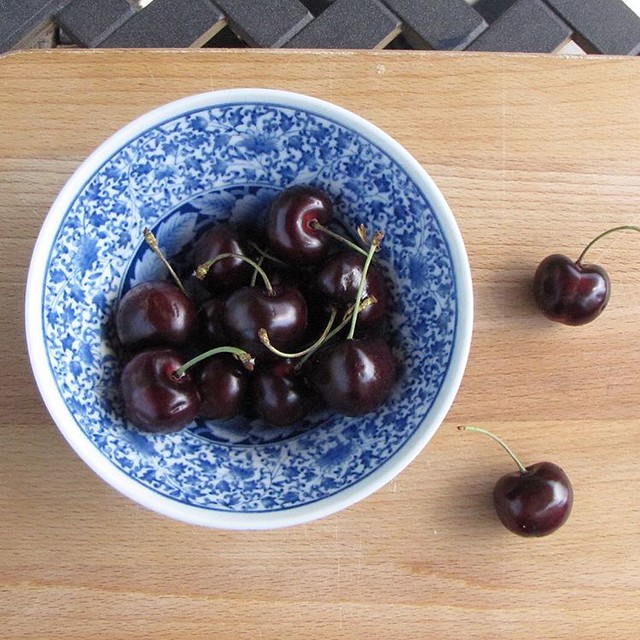
While on hospital-visiting duties, I picked up yet another new food magazine in Selfridges this week – ‘Cherry Bombe’. What’s unusual about this one (apart from it’s price and thick paper) is that the contributors and interviewees are all women. While I could probably do without the cover interview with model-turned-cookie maker Karlie Kloss, the Oma & Bella behind-the-book feature is very good.
Brown butter financiers or friands
May 5, 2013 § Leave a Comment
I sometimes come across this sort of silicone bakeware, and wonder what on earth it’s for (although if it’s as nice as this sunflower one, I don’t worry too much about that). But then I remember financiers. Financiers, or friands, are not something you often come across, but they are a great recipe to know about. Made with egg whites, melted butter, flour, sugar and ground nuts, they are moist little cakes that keep really well.
Financiers are from the French kitchen, and used to be baked in little gold-ingot like bars, which gave them the name. Traditionally, they would be made with brown butter and ground almonds – a rich and somewhat expensive combination which may account for the name. Friands are the antipodean version, less likely to include anything as fussy as brown butter, and more likely to be a carrier for raspberries, blueberries or other fruit flavours.
Another good reason to have a friand or financier recipe on hand is that they are a great way to use up leftover egg whites. Unlike macarons and other egg white recipes that use a meringue base, these don’t require the whites to be whisked to peaks. They only need a little whisking to break them up, and you can easily use 3, 4 or 5 egg whites for one batch of cakes (handy if you’ve been making ice-cream).
Because of the melted butter and nuts, these are quite dense and rich little cakes, that are best baked in small tins. Friand tins are little oval shapes, but mini muffin tins are the perfect size, if you grease them well. You can also use silicon bakeware in lots of beautiful shapes, like this sunflower mould I picked up in Paris. This seems to cook them more evenly, although you also get less of the brown crust. When baked, the outside should be lightly browned, and when cool, just a little crisp. The interior will be rich and dense with the nuts.
They are a great thing to have on hand if you think you don’t want a proper dessert or cake, just something sweet to nibble with tea or coffee at the end of a meal, or as a pick-me-up in the middle of the afternoon.
For these sunflower cakes, I wanted to keep the mixture plain – no berries or other decorations, so that the shape of the sunflowers would show up nicely. Instead, I used the traditional French approach and made brown butter, which along with a little vanilla, formed the only flavouring. There will be more on alternative flavours for financiers in a forthcoming post.
Scroll down for more on what’s behind the recipe, including details on brown butter and the role of the egg whites.
Brown butter financiers
- 150g brown butter
- 165g egg whites(5)
- 175g icing sugar
- 50g plain flour
- 100g ground almonds
- 1 teaspoon vanilla extract
First make the brown butter, as directed below, and set aside to cool.
Preheat the oven to 200C/180C fan/400F and thoroughly butter your moulds or tins.
Whisk the egg whites gently to loosen them, but not enough to create a froth. Sieve the icing sugar, flour and almonds onto the whites and stir together until combined.
When the butter has cooled but is still liquid, add to the mixture and fold together gently until completely combined and homogenous. If you like, add some vanilla extract or a drop or two of almond extract.

At this stage, you can refrigerate the mixture overnight or for a few days, until you are ready to bake.
Fill the moulds about 80% full, and bake for 8–12 minutes. The timing will depend on the tins you are using – both the material and the size. They are ready when cooked through – test with a skewer – and with toasted brown edges.
Leave to cool for 5–10 minutes and then turn out of the tin while still warm. If using metal tins, you may need to use a knife to ease the cakes away from the sides. Eat the same day if possible – although they will keep for several days in a tin, the texture won’t be quite as good, and you won’t get the same contrast between crisp edge and soft, dense interior.
What’s behind the recipe?
Brown butter

Brown butter is what happens when you cook butter until the water has all evaporated and the temperature rises high enough to toast the milk solids in the fat. This produces a little bit of brown sludge at the bottom of the pan, and a lovely toasty, nutty flavour in the butter. It’s sometimes called beurre noisette, and used as a sauce in some dishes of French cookery.
You may have made brown butter accidentally before, by putting butter into a too-hot pan, and seeing the little brown grains appear. Brown butter, made deliberately, is usually done in a small saucepan, of pale metal so that you can see the browning, with a larger quantity of butter. Melt the butter over a moderate heat.
Once the butter is gets close to 100C the water in the butter will start to boil (about 15% of butter is water, depending on the brand you use). Let this bubbling continue. When the water has all gone, it will stop bubbling, and go quiet. This is when you need to pay close attention, and probably stir occasionally. The milk solids – those white, milky parts that appear when you melt butter – will sink to the bottom of the pan and be the first to brown, so you need to scrape them off and stir them about to make sure nothing burns. You might also start to get a foam on the top of the butter. Once the solids at the bottom are a nice nut-brown, and the whole thing smells nutty, remove it from the heat and pour the whole thing into a heatproof bowl or measuring jug. This will help to stop the cooking and make sure it doesn’t brown any further and start to burn. Most recipes using brown butter, including financiers, will need the butter to be cooled – it will be extremely hot when it comes out of the pan.
Why whisk the egg whites if you’re not going to form peaks?
Financiers don’t need the aeration you get from an egg white whisked into snowy peaks, but the recipes often ask you to whisk them a little. Why? The proteins in egg white attach to each other very well, which is why a really fresh egg broken onto a plate will ‘sit up’, and why it’s so hard to divide an egg white in half, if you’ve ever tried to do that. Whisking the whites just a little helps to break apart the proteins and loosen the whole thing up. This makes it much easier to mix in the other ingredients.
Why do financiers only have egg whites in?
Financiers are a puzzle to me. Here is a little tender cake, that doesn’t have any baking powder in, and doesn’t whisk air in through creaming or whisked egg whites. So what makes it rise instead of being a flat pancake?
My best guess is that the egg whites provide a stretchy protein structure, so that when the water and fat in the recipe heats up, and steam is released, the stretchy egg proteins are there to capture it and keep the bubbles in the final cake. There is very little flour in the recipe, so the egg white proteins are likely to be contributing most of the structure that holds the cake together. Ordinarily, egg whites create quite dry, crisp things, but all those nuts and butter keep things rich here.
Some other great friand recipes:
Links and thoughts from April
April 30, 2013 § Leave a Comment
April has been a waking-up month. This winter has seemed so long and cold that when the sun finally came out, and the ground started to warm and flowers started to appear, it was like emerging from hibernation. Suddenly outdoors was something to linger in, instead of something to be battled through as fast as possible.
I was nudged by someone to buy bulbs from Bloms Bulbs in the autumn, and now I am really glad I did. The tulips in particular have been spectacular. I’m always surprised by how many come up from previous years as well. I have a habit of planting them in tubs and forgetting about them as soon as they have gone over. So the ugly pot of weeds I’ve been hosting on my front step for the last six months or so is suddenly filled with creamy tulips.
I said this on twitter but Gluten Free Girl has absolutely floored me with some of her writing this month. She writes honestly and from the heart anyway, but when her car was stolen, and when she marked an anniversary with her husband, it generated some truly absorbing prose.
I found this article about J Crew really interesting, especially the interaction between Jenna Lyons, the creative director, and the Chief Exec. If you’re in the UK, you may have come across J Crew in references to to Michelle Obama – she and her daughters often wear the brand. They are essentially a preppy, clean-cut clothing company, a little like Gap, but have moved towards a more cutting-edge look in recent years, as the article describes. I still have a couple of items from there that I really like that I bought when I was living in Palo Alto in 2004/5.
Although it’s just the two of us that sit down to dinner in our house (and sometimes not even that), I really enjoy Jenny Rosenstrach’s ’Dinner: A love story’ blog and [her book of the same name](“Dinner A Love Story – Amazon.co.uk”). I really loved her 100 Rules of Dinner post – not just rules for dinner, but rules for cooking, good food and life. My favourite is probably #71:
Performance enhancing drugs are to sports as butter is to cooking. Which is not
to say that butter is evil. But it is cheating.
although I am a completely on board with #29 and #54, and a total evangelist for #15:
Resist the urge to apologize when you’re cooking for people. Most of the time your
dinner guests won’t notice anything is wrong until you bring it up.
Making late-night birthday cake
April 28, 2013 § Leave a Comment
Or How to bake a cake between 9:30pm and 11pm
There is something quite sad about supermarket birthday cakes. Don’t get me wrong – I’ve certainly bought them before now – but it’s just not the same as a homemade cake. There’s a particular large supermarket that sells a rectangular sheet cake, decorated with sweet chocolate buttercream and stars that often makes an appearance at my workplace. It looks so promising, with swirls of icing along the edges, but it always seems disappointing. The sponge is damp and collapses easily. The icing is gruesomely sweet. Even the chocolate stars on the top are have that waxy quality, more cake covering than chocolate.
I am an unashamed snob about birthday cakes. They need to be homemade, or from a good bakery. It’s not a celebration if the cake is going to coat your mouth, give you a sugar crisis, and is made of palm oil and emulsifiers. And it’s not too hard to come up with something better than those options.
Rectangular tins are perfect for low-hassle birthday cake. No complicated turning out or layering, just leave it in the tin, cover with frosting and then pop the lid on to take it to the birthday destination. I have an old traybake tin from Lakeland that I tried for the first time the other day. Although the tin is a little thin, and the non-stick looks a little fragile, its killer feature is a plastic lid with a handle that clips onto the edges for transportation. But even without a bespoke lid, if the tin is deep enough to allow the cake and icing to sit below the rim, the whole thing can be wrapped in cling film (plastic wrap) for transport.
It’s even possible to make a birthday cake if you’ve been to the pub after work and don’t get home until a bit late (as long as you’re fairly sober). Here’s how to make a late-night birthday cake:
- Get in the door at 9:20pm
- Immediately switch on oven, and get butter out of the fridge. Cold butter and sponge cakes don’t work well together.
- Find Smitten Kitchen’s cookbook because you remember she has a sheet cake recipe in there (basically this one, but scaled down).
- Find the weight of butter needed, and weigh it onto a plate. Put this into a microwave for two minutes on the lowest, lowest setting so it can soften.
- Go back to the book and check that you really do have all the ingredients called for before you go any further. Yes, it seems OK. The only tricky one is buttermilk, but that can be taken care of with the last of the yoghurt, combined with some milk.
- Dig out your traybake tin and check it is roughly the right dimensions. 20 x 30 cm is a typical size for a traybake recipe, but after last week and the coconut cake, I want to make sure this is deep as well. Put a piece of parchment paper in the tin – not only to stop sticking but to protect the non-stick from scratching when the cake is cut!
- (Remember you haven’t had dinner yet, and re-heat the leftover curry)
- Prepare the rest of the ingredients: whisk flour with the baking powder and salt in a bowl. Get the eggs from the fridge and immerse in a little bowl of warm water from the tap – everything as close to room temperature as possible. Whisk the yoghurt and milk together in a jug to make them smooth.
- Once the butter is soft, add it to the bowl and mix it a few times to make sure it’s creamy. Weigh the sugar straight into the bowl and set the mixer running for a good five minutes or so. The mixture needs to become pale and fluffy, not sandy, and as there’s a lot of sugar in proportion to the butter, this takes a while. Don’t rush this bit – everything else is easier if you get this right. Go and eat dinner.
- Once you have this fluffy state, add the eggs one by one (drying them so they don’t drip into the bowl). If you’re sensible, you would crack them into a cup or ramekin first, to make sure you don’t get shell in the mix. (I go for speed and crack them straight over the mixing bowl.) Mix in one at a time, until you get back to that fluffy looking mixture. Add the vanilla.
- Now the job is to get in all the flour and the yoghurt/milk without either a) overworking the mixture once the flour is in, b) leaving big patches unmixed, or c) having it all curdle. A good rule is to alternate the two – one third of the flour; mix; half the liquid; mix; one third more flour; mix; rest of the liquid; mix; rest of the flour. This makes sure that nothing overwhelms the mixture at any one time.
- Once it’s all in (and you’re sure that you got the edges of the bowl mixed in too), scrape it all into the tin, smooth to the corners and bake. By now it’s about 10pm.
- While the cake is baking, make some icing. The treacle chocolate fudge frosting on this page is a good option (I made it without the yolks and water, and with creme fraiche and 2 tablespoons extra icing sugar added). It uses a base of cornflour-thickened chocolate custard, with more chocolate mixed in while warm. Cover and leave until the morning. A simple buttercream of butter and icing sugar would also work.
- When the cake is evenly golden on top, and a cocktail stick comes out clean, take it out and put onto a cooling rack. After about 10–15 minutes cooling in the tin, turned it out to cool, leaving the parchment still on the bottom. Leave to cool overnight and go to bed.
Drømmekage – dream coconut cake
April 26, 2013 § 2 Comments
Drømmekage is a genoise sponge beneath a layer of coconut caramel – a plain cake made glamourous with a baked-on topping. This one is from a recipe by Signe Johansen, from her cookbook ‘Scandilicious’. It belongs to a class of Scandinavian baking that seems to be closely linked to German traditions of Kaffee and Kuchen – Swedish Toscakaka and German coffee-cakes with streusel toppings. There is a Danish word for the togetherness of coffee and cake, hearth and home: hygge. (It also appears on this excellent map of untranslatable non English words. These are cakes designed to be sliced and shared through an afternoon, not squirreled away in a tin for later. It was certainly devoured by my work colleagues last Friday, and generated not a little happiness.
A cake with a baked-on topping is a great thing. A plain cake, but with a little something extra. They strike a nice balance between the slight austerity of a very plain Madeira or pound cake, and the over-the-top elaborateness of a piled high cupcake or layer cake. Whether its flaked almonds on top of a bakewell tart, or a handful of granola on the top of a muffin, they provide not just decoration but a contrast in texture and flavour.
In this cake, the cake is too delicate to add the topping before it is baked, so the solution is to bake the cake, then add the topping and bake again to brown it and merge it with the cake beneath.
This makes it especially important to know when the cake is done – adding the topping too early will (as a Danish colleague warned me) sink the cake, collapsing the sponge into a dense layer. It’s also important to recognise when the caramel is thick enough to top the cake without sliding off.
I’ll give you the recipe, reproduced with very kind permission from Signe’s book, then discuss what’s happening behind the recipe – what are the critical steps?
Drømmekage - Danish Coconut Dream Cake
from ‘Scandilicious – Secrets of Scandinavian Cooking’ by Signe Johansen, Saltyard Books
(and if you like this and live in London, you should definitely consider attending Signe’s Scandi brunch and supper club).
- 4 medium eggs
- 300g golden caster sugar
- 1 teaspoon vanilla extract
- 150g butter, melted
- 150ml buttermilk (or a mixture of yoghurt and milk)
- 300g plain flour
- 3 teaspoons baking powder
- 1/4 teaspoon salt
Topping
- 200g butter
- 200g light brown soft sugar
- 150g dessicated coconut
- 100ml whole milk
- 1 heaped teaspoon vanilla sea salt (I used a scant teaspoon sea salt plus half a teaspoon of vanilla bean paste)
Preheat the oven to 190C/170C fan/gas mark 5. Line a 20x30cm deep rectangular cake pan with parchment paper, leaving a 2 inch overhang to help remove the cake later. It helps to have the paper extend above the sides of the tin a little to contain the topping later.
Melt the butter and leave to cool a little. Combine the flour, baking powder and salt in a bowl, and mix with a whisk to distribute the baking powder.
Using an electric mixer beat the eggs, sugar and vanilla together until thick and pale, the batter should form a ribbon when the whisk is removed from the bowl. This will take several minutes on high speed. If you’re not sure whether it’s thick enough, give it another minute.
Pour in half the melted butter and buttermilk and sift half the flour onto the batter. Fold the batter together with a large metal spoon, trying to incorporate as much of the flour, butter and buttermilk without knocking out the air from the eggs.
Pour in the remaining butter and buttermilk and sift over the remaining flour. Fold the batter as above.
Pour the batter into the prepared cake pan and bake for 20 minutes or until the cake has doubled in size, looks light golden brown in colour and is firm to the touch. A toothpick inserted into the cake should also come out clean. You want to be sure it has baked thoroughly and will bear the weight of the topping to come.
Whilst the cake is baking make the topping by adding all the ingredients into a medium saucepan set over medium heat, stirring constantly to prevent the sugar from burning. Cook for 5 minutes until the mixture has thickened and some of the liquid has evaporated. It will reduce a little and also change colour to a slightly darker shade of brown. You want something thick enough that it will spread over the surface, and not run too much.
Once the cake is out of the oven turn the temperature up to 220C/200C fan/gas mark 7. Spread the topping evenly over the cake, return to the oven and bake on the upper-middle shelf for 5–10 minutes until the topping is a toasted deep golden colour (I found this step took more like 15–20 minutes in my oven). Cool in the tin before cutting into squares to serve. As the topping had set into a lovely chewy caramel in some places, I found it easiest to turn it over onto a board, topping side down, and slice with a serrated knife.
Behind the recipe
So what’s going on behind the recipe? Where are the critical steps? I think there are four steps that are particularly important:
Whisking the eggs well enough to support the rest of the cake
What makes this a genoise-type of sponge is that it is based on a first step of whisking the eggs and sugar together until thick, rather than the more usual process of creaming together butter and sugar. This thick mixture is known as ‘taking it to the ribbon stage’, as the mix should form a thick ribbon as it trails down from the whisk into the bowl. Once this is done, the other ingredients – in this case, flour, melted butter and buttermilk – are folded in.
Eggs and sugar whisked together – whether just egg whites or whole eggs – will form a pretty stable foam that can hold lots of air, even when deflating ingredients like butter and flour are folded in. It’s almost impossible to over whisk eggs once a substantial amount of sugar has gone in, so if you want to err on the safe side, just keep going with the whisk a bit longer. This is one of those times where you will give up your right arm for an electric mixer – the handheld ones work really well and are not expensive. I used my Kitchenaid with a whisk attachment.
Baking until firm enough to support the topping
In order to support the caramel topping, it’s important to bake the cake until all trace of liquid cake batter has disappeared, and the cake is fairly firm. The recipe gives the baking time as 20 minutes, but given all the variations in oven temperatures and baking tins, you should always check for doneness before the time is up, then at five minute intervals until it looks close. The first thing I check for with a sponge, whether genoise or creamed, is whether you can still see a wobbly lake of batter in the centre. If a gentle shake of the tin reveals there is still a puddle under the surface you can safely give it another five minutes. Once that has gone, you might want to check more frequently with either a skewer, cocktail stick or small paring knife to see that crumbs rather than liquid batter sticks. To test whether it is firm enough to support a topping, lightly pressing the surface with your finger, to see if it will resist and spring back, is another good test.
Cooking the caramel on the stove
The recipe asks for the caramel mixture to be cooked in a saucepan before adding it to the cake. Caramel is a really temperature sensitive thing, and the thing to know about caramel temperatures is that it won’t start to rise much above 100C until almost all the water is removed from the mixture. This is (I presume), why the mixture is first boiled on the stove – to remove most of the water, and create something that will readily form a set caramel in the oven. I found that the volume reduced quite a bit, and the colour changed from a pale gold to a darker shade.
Baking the caramel to caramelise it further
The aim of this final stage is to convert the sugar from a runny caramel to a chewy toffee-like topping. This means baking it in the oven long enough to caramelise it further and ensure it sets in place. I had difficulty with this stage, as my tin wasn’t deep enough, and as it baked, the topping overflowed the paper lining and spilled over into the oven. Having a very even surface to the cake will help make sure the topping browns evenly, and if you know your oven has some hot spots, keep checking and turn it around periodically, so that it evens out (I put my tin on a baking sheet at this stage to catch any overflowing topping, and also to make it easier to turn around).
Other people’s cookbooks
April 23, 2013 § Leave a Comment
One of the things I love about the web, and about twitter and food blogs in particular, is the vicarious friends you make. I get to know people so well through their writing and the little details of their lives, that when they do something big, like publish a cookbook, I want to buy it just to show my support. I’ve found myself doing this more and more in recent years. It started with Clotilde and Chocolate & Zucchini. The came Molly from Orangette and her book ‘A Homemade Life‘. The Smitten Kitchen Cookbook
is probably my favourite of the year so far, and were it not for blogs, I wouldn’t have discovered Jenny Rosenstrach and Dinner: A Love Story
(not to mention her transformative pork Ragu recipe).
Jennifer Perillo and Shauna James Ahern, a.k.a. In Jennie’s Kitchen and Gluten Free Girl, are writers I only discovered in the last couple of years, although both have been writing for much longer.
Jennifer I found, like many others, when the food blogging world reached out after the sudden death of her husband Mikey. Her writing at that time was utterly compelling, full of exposed emotions and tenderness. She has written ‘Homemade with Love‘ about their family and the food they love.
Shauna I had heard of many times – she is so well-loved by other food bloggers – but I think I had assumed (wrongly) that because she was writing gluten-free recipes, it wasn’t for me. How completely wrong I was. Her latest book is ‘Gluten-Free Girl Every Day‘, about cooking for and with her family too – her chef husband and her daughter.
Both have recently written about their books and had friends make a short video as a book trailer. And both videos really convey a sense of what you expect these people to be like if you read them regularly: Jennifer, the strong, proud mama who surfaces what’s on her mind, no matter how emotional, and who is there for her girls. Someone who will tell you the story of the recipe and make you care about it. Shauna, the happy, capable mum who just wants things to taste delicious and wants to enjoy the simple things. I love that these videos give me a chance to ‘meet’ both of these writers, and figure out a little more about them.
Check out both of these posts – and see if you don’t want to cheer them both on too. Both of these books are now on my wishlist.
http://glutenfreegirl.com/2013/04/here-it-is/
http://www.injennieskitchen.com/2013/04/why-we-cook-food-curate/
Braising a blade roast of beef
February 24, 2013 § 1 Comment
I like to braise a big piece of meat at the weekends. The smell of braising meat makes the kitchen a welcoming place to hang out, and it generates the sort of leftovers that can be very easily turned into quick after-work meals.
I love Jenny Rosenstrach’s Pork Shoulder Ragu, but this weekend I decided to do beef for a change. I asked the butcher for brisket, but they suggested it was probably too fatty for braising and proposed blade instead. And that was a great suggestion. (I bought my blade roast from the superb HG Walter in Barons Court – just the sort of place that will give you helpful advice about a good cut for braising.)
The blade roast – although I wasn’t sure when I bought it – is a cut from the shoulder. You will sometimes see beef braising meat as ‘chuck and blade’ – chuck being the other part of the shoulder. The really distinctive thing about the blade, also called the feather blade, is a central vein of connective tissue, from which radiates veins of fat, looking like a feather running through the centre of the meat. You can cut either side of this tough central vein to create flatiron steaks, or cut across for feather blade steaks. I didn’t take a picture of the meat before I started cooking, but you can see photos of what the blade steaks look like here.
Or you can do as I did, and as advised by the many, many website recipes I visited on the way home, and pot roast it until that central vein dissolves into unctuous jelly.
(I particularly liked the look of Molly Steven’s recipe for beef braised in Zinfandel).
The braising liquid could have been wine, or just stock, but I chose a dark ale – a Bath Ale stout – along with beef stock. I could also have added tomatoes to the sauce to create a more pasta-like ragu in the end, but wanted to keep the flavours cleaner, and didn’t think that the bitter of the stout plus the acid of the tomatoes would work well together.
For the stock, I used a puck of concentrated beef stock from the freezer, that I’d made when I bought beef bones last, and added to it the concentrated chicken stock that was leftover in the fridge.
Lastly, I made a couple of short videos of some the key steps – it’s a bit of an experiment.
http://cinemagr.am/show/122493631
Braised blade of beef
- 1 blade roast of beef (or other beef shoulder joint), about 1.8kg
- 2 medium onions, peeled and chopped
- 1 leek, washed, halved lengthwise and chopped into thick slices
- 2 medium carrots, peeled and chopped into chunks
- (a stick of celery, chopped, if you have it)
- 500ml dark ale or stout
- 500ml beef stock
- about 1 tsp each of thyme, rosemary and sage
- 2 bay leaves
Tie up the beef – putting three strings around it to keep it neat and together, make it easier to turn while browning, and help it to fit into the pot. Then sprinkle with coarse salt to get a good bit of seasoning.
Heat a casserole dish big enough to take the beef – I used my 7 litre oval Le Creuset – and add a few teaspoons of olive oil. I didn’t add much more, as the beef already had a cap of fat on the top of the meat. Place the beef (fat side down) into the hot pot and let it sit and brown in the pot while you prepare the veg. You want to leave it for at least three or four minutes on a high heat for each side, to make sure you get a good brown crust. That will create lots of flavour in the final dish.
Meanwhile prepare the vegetables, and gather the herbs, pausing to check the meat every now and then. These are all stock vegetables, there to flavour the braising liquid and to provide a trivet to keep the beef off the bottom of the pot. Once the cooking is done, most of the flavour will have come out and into the liquid, so the veg can be discarded. So don’t spend too long getting the pieces neat and pretty.
Once everything is browned nicely, the beef comes out onto a plate, and the veg go into the pot and start to soften.
As the water comes out of the veg, it will, along with some judicious scraping, start to dissolve the sticky meaty juices on the bottom of the pot that are crucial to the flavour. After stirring veg around a little, put the lid on the pot for a few minutes to encourage more of the juices from the vegetables and to make sure that all of the sticky meat lifts from the base of the pot. (Giving the vegetables time to soften and cook a little in the fat has another benefit – it produces different flavours than you create by submerging the veg directly into the liquid. It allows sugars and other compounds to be generated in the high-heat possible by cooking in a little fat. As soon as we add the liquid, the maximum temperature will drop right down to 100C or thereabouts.)
Once you’ve developed lots of good flavours on the beef and the vegetables, it’s time to add the liquid and the rest of the flavours. First, add the stout or ale to the vegetables, stir to get up any last sticky parts, and then simmer until it’s reduced by about a third. This boils off a bit of the alcohol, and concentrates the flavours a bit.
Add the beef back to the pot, along with any juices from the plate, and finally add in the herbs and the stock, and a good bit of seasoning (if your stock wasn’t seasoned, you’ll probably need at least a couple of teaspoons of salt – taste to check).
Cover the pot with greaseproof paper (which helps to seal the pot and also makes it easier to clean up the lid afterwards!) and put into a 140C oven for 4 hours. After 30 minutes to an hour, check on the dish, and if it’s bubbling very rapidly, turn it down another 10 degrees. When done, the meat should pull apart with a fork.
Remove from the oven and leave to cool for an hour or so in the liquid. This allows the meat to rest and reabsorb some of the juices. Remove the meat into a dish to be carved. Strain the liquid to remove the vegetables and herbs, and skim off the fat (I like to use a fat-separating jug for this. Reheat the liquid and taste for seasoning. Serve thick slices of the braised meat with the strained braising liquid.
Bonus leftovers tip: Reheat chunks of the cold meat with a couple of spoonfuls of the braising liquid (which will form a jelly in the fridge) and a splash of tomato sauce for an almost-instant beef ragu sauce for pasta.