Reading in 2015 – food, family and feminism

What sort of a year has it been? A good one, I think. I went back to work. I think I even managed to do some useful things, in between nursery drop-offs, pick-ups, repeated toddler-borne colds, holidays and all the rest. I started putting E into nursery for an extra half-day, to give me a morning to myself each week, which has worked brilliantly. It gives me a slot to run, that I really can’t miss, or there are no other opportunities. And I can get household admin and errands done without a toddler in tow. We have had a lot of good times as a family, and have had more meals with friends than the year before, simply by setting a schedule in advance where we would make time for a Sunday lunch.

Here are some of the things I read and enjoyed this year.

The Silicon Valley Suicides – a daunting read, about high school and normalising the pressure kids are under from parents and from each other.

This piece on stereotype threat from the MIT Admissions office blew my mind, and continues to influence me each day, especially at work. Are we priming ourselves and each other to underperform without realising it?

The writing exercise of ‘greening’ or striking out a specific number of words from a short piece is an appealing one, although I expect very hard to acquire.

To mark the anniversary, the New Yorker republished a huge essay on the dropping of the bomb on Hiroshima. It’s a stunning piece of work, detailed and engaging and manages to personalise a tragedy on an epic scale.

Oliver Sacks died this year. This piece on coming to terms with the end of his life is characteristically good-humoured and beautiful.

(Many of these stories I found via the excellent Next Draft email newsletter, that brings me links to some of the best writing on the web every day, without overwhelming me. Not a sponsored link, I just like it.)

On food and cooking:

The Myth of Easy Cooking – argues that cooking at home every day is hard, and we should stop pretending that it takes no effort.

Bee Wilson is a voice of incredible reason in the fad and trend-ridden world of food. I am currently mid-way through her brand new book on how we learn to eat, First Bite.  I loved this piece on whether or not you should stick to recipes.

This piece on a ritual of Friday Night Meatballs inspired our own series of open Sunday lunches in 2015, something we are likely to repeat this year.

Eating Well at the End of the Road shines a spotlight on a food community in a remote Alaskan town.

A debate broke out earlier in the year around Food52’s Piglet cookbook tournament: is it sexist to judge a cookbook by the pictures?

On family, kids and work-life balance:

I loved a lot of Rachel Jeffcoat‘s writing at Make a Long Story Short this year, but special mentions go to this piece on parenting a boy that seems to have a lot in common with you, without transferring your own anxieties; and a runner’s creed, for those who hate it (but do it anyway). She also has a reading and writing round-up of her own.

Shauna, aka Gluten Free Girl, is another writer who writes beautifully and with raw honesty about family and parenting. This is a lovely piece on accepting where you are, in the midst of messy, sometimes scary life.

And this piece of hers about having a rhythm and a ritual to eating each week is probably the food piece I referred back to most this year.

I added Miriam Gonzalez-Durantez to my list of inspiring women this year. Lots of good stuff in this interview, on work, and feminism and family (from before the election).

Via brainpickings, a lovely 1925 article on the rewards of fatherhood.

Advice to a daughter – a chance to revisit advice from mother to daughter, scrawled in a notebook and unearthed later.

New York Times writer David Carr died this year. I didn’t know him, but someone who did linked to his 2008 piece about being the father to twin baby girls while being addicted to crack. It is exhilarating and terrifying in equal measure, and not at all what you might expect.

A former clerk for Ruth Bader Ginsburg on being a stay at home dad.

Brilliant and down-to-earth make-up columnist Sali Hughes being interviewed on how she balances work, life, kids and the rest.

And if all that wasn’t enough, Bloomberg’s list of the 38 best stories we didn’t write had me bookmarking every other link to read later.

Looking back, looking forward

Did as I was told with the pasta tonight, following @rachelaliceroddy instructions on all the ways to get it wrong.

We are finishing the year with a ragu made from the leftovers of the Boxing Day roast rib of beef. It feels appropriate to round out the year with an excellent use of leftovers. I also used my Christmas presents to good effect in the meal: following Rachel Roddy’s directions on how to cook pasta from ‘Five Quarters’, and then using my brand new (much improved) pepper grinder to finish off the plate.

We won’t do much different tonight, in celebration of New Year’s. We’ll maybe break out the cheese and the last of the Christmas chocolates. But we will talk of plans for the coming year, of hopes and wishes and things we would like to do more of. And we will laugh together.

I’m proud of the blog this year. I posted regularly all year – every week, except for the last couple. In the ten years I’ve had some sort of blog at this domain name, I’ve never managed to post that consistently. But I would like to get back to writing more than just a list that summarises the week, to learning new things, and trying my best to explain why some things work and what’s going on between the lines of a recipe. So that’s my resolution for next year. Regular posts, but also interesting ones. I hope you’ll hold me to it. Happy New Year.

Friday food links – 4 Dec 2015


Christmas has officially appeared on the horizon now. Sorry to those of you who dread this run-up, but after the 1st Dec, I think we’re officially allowed to begin preparations. Ours kicked off promptly with a Christmas party on the 1st, followed by a wet-and-windy trip to see the Christmas lights at Kew Gardens. As I’m posting this late (on Saturday) I’ve also made progress on a gingerbread house, using some neat cutters from Lakeland. Recipes:

Without a recipe:

  • Sausages and roast veg
  • Pork and red pepper stir fry, with purple sprouting broccoli and rice
  • Pasta bolognese

Reading:

Friday food links – 27 Nov 2015

#latergram of the chocolate pavlova from Sunday lunch 😋

A week of holiday, away at Center Parcs means not much cooking. I brought a stack of ready meals (Charlie Bigham), and supplemented by my mother-in-law, we’ve brought enough food to last the week in our little lodge.
The amusements here are relatively basic if you’re 18 months old, but fortunately, at this age, you don’t need much to amuse you. Some time in the swimming pool, a few walks and the novelty of riding in a cycle trailer are all very diverting. And a mere three DVDs, plus a stack of books and a teddy bear are enough to occupy the dark and rainy hours.

Before we went away, we had our final all-comers Sunday lunch of the year. As we were catering for a gluten-free guest, I made two small modifications – using rice and potato flour to thicken a slow-cooker beef shin stew, and making a pavlova rather than a tart or cake for dessert – pretty undetectable modifications. The pavlova in particular was a great choice – a Nigella recipe for a dark chocolate, chewy meringue, topped only with whipped cream and raspberries. My daughter just wanted to pick the raspberries off the top, and demanded that someone else remove the cream from them. Sometimes I’m not sure that we are related.

Recipes:

  • Slow-cooker beef shin stew – I flitted between recipes for this, but eventually based it on the beef shin recipe in Slow Cooked, with some Boeuf Bourguignon twists: I substituted the beer with a mixture of red wine and beef stock. And after it had cooked overnight, I strained out the meat and vegetables, and reduced the sauce with a bit of potato flour to thicken it further. I added this back to the meat, along with some sautéed mushrooms, some browned pancetta, and a few sautéed shallots. This then had another hour in the oven just before it was served.
  • Hasselback potato gratin from Serious Eats – I couldn’t quite bring myself to make the full cheese-and-cream version, so mixed cream and milk to coat the potatoes, then added the remains of the beef stock to the bottom of the dish before baking. It probably could have used some extra butter on top to make the tops properly crispy, but was pretty good nonetheless, and much easier than the traditional version of layering.
  • Chocolate raspberry pavlova – from Nigella’s ‘Forever Summer
  • Dark Banana ginger bread – using up the browning bananas before we left on holiday. This is an old Dan Lepard recipe, super-simple to make, but with a good flavour. I added the zest of a clementine and a teaspoon of mixed spice as well.

Without a recipe:

  • Pasta with tomatoes, with bolognese
  • Various ready meals: Charlie Bigham fish pie, chicken and mushroom pies, lasagne. Donated sausage casserole and cottage pie (thanks, Chris!)
  • Cheese and ham quesadillas

Reading:

Devouring this book on holiday this week. Ruth Reichl (and @nigellalawson) write my favourite food prose.

I’ve spent much of the week engrossed in Ruth Reichl’s new book, ‘My Kitchen Year: 136 Recipes That Saved My Life’. Ruth is one of my favourite food writers, but she’s not very well known in the UK. She was a restaurant critic for the LA Times and New York Times, then editor of iconic American food magazine ‘Gourmet’ until it was shut down by Conde Nast in 20xx. This book is about the year after she lost her job, and the healing power of getting into the kitchen. Much like Nigel Slater’s recent books, it’s organised into seasons, and has a story with each recipe of what she was doing at the time. I’ve already bookmarked a stack of recipes to make, including Venetian pork (little pieces of sticky pork ribs), her basic chilli, diva grilled cheese, gingered applesauce cake with caramel glaze and Big New York cheesecake.
Other reading:

And if none of that is your thing, Sali Hughes has her beauty gift guide out too.

Friday food links – 20 Nov 2015


Today was a not-much-to-show-for-it day. There was breakfast, and swimming, and grey skies. There was a little bit of work squeezed in here and there. There was family and comfortable silences. There was paper, and glue and crayons and pretending to make cakes. I’m not even making dinner tonight – it’s a rare night out for the two of us. It was a day where if you asked what happened, the accurate answer would be ‘not much’.

But it was a good day, not a disappointing day. These are the days that make up a life. It contained cuddles and conversation and smiles. It didn’t have that much TV or email. It would have been good to spend more time outside, but the sudden chill in the air drove us indoors, with me wondering where my gloves are.

This weekend we are entertaining friends and family, and getting ready to go on holiday next week. If you have a quieter weekend planned, and would enjoy a baking project, it might be a good time to make Christmas cake (I posted about the recipe I use this week), Christmas pudding (Deborah at Licked Spoon is making hers) or advent gingerbread (from Jules at Butcher Baker blog).

Recipes:

  • Slow cooker roast chicken
  • Slow cooker sausages and beans – a severely corrupted cassoulet

Without a recipe:

  • Chicken pie
  • Pasta bolognese

Reading:

Behind the recipe: How to make Christmas cake

P1000568

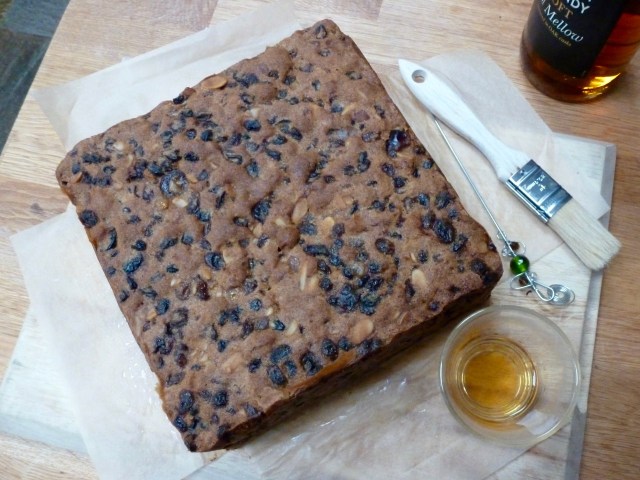
A couple of weeks ago I made this year’s Christmas cake. I make my husband’s grandmother’s recipe, although, much to his horror, I do make some adjustments here and there. But it produces a fruit-packed dark cake that we both love, so it always seems worth it. And more than ever now we are a family of three, I enjoy the ritual of digging out the fruit in October, and making the cake, knowing that it promises cosy evenings and feasting to come in a couple of months. Even when all my good intentions of early Christmas shopping and house decorating come to nought, I feel comforted knowing that at least I have a cake stored away, that will make tea times feel festive.

Shauna from Gluten Free Girl wrote a lovely post earlier this year about the ritual of making the same food each week, of having a pattern to the week that everyone recognises. I feel the same way about these annual rituals of cooking. There is great comfort in a cooking ritual that evokes a specific time of year: marmalade in January, strawberries in June. But for a Brit, Christmas is the one time of year that we celebrate with specific festive foods. Americans have Thanksgiving, the Fourth of July, the Super Bowl to mark their cooking year. With Hot Cross Buns seemingly available all year round, Christmas is the last food feast in the calendar, even if it does seem to start in September.

When making a fruit cake for Christmas, there are certain rituals to the process that seem arcane. It seems to be a very complicated recipe, and it’s tempting to shortcut as many steps as possible. But why is the process so peculiar, compared to baking a straightforward sponge cake?

The main thing to remember about fruitcake is that it is (or should be) more fruit than cake. And dried fruit needs a few things to bake well: to be moist enough not to dry out; to be cooked slowly so that all the sugar in it doesn’t scorch; and to be suspended in a cake batter firm enough so that it doesn’t all sink to the bottom when baked. Here are some of the steps you might find in your Christmas cake or fruit cake recipe, and why they are worth doing:

Soaking the fruit

Many recipes start with measuring the fruit, and soaking it overnight (or for even longer). This plumps up fruit like raisins and currants, and the liquid they take in here will help keep the cake moist as it sits. And if you soak in brandy, rum, whisky or another spirit, it will also help to preserve the cake.

Wrapping the tin in brown paper

Using all my Blue Peter skills on the cake tin for the fruit cake

This is what really says Christmas to me. The idea when lining the tin with multiple layers of paper, and then wrapping newspaper or brown paper around the outside is to insulate the tin, and prevent the outside from browning, and ultimately scorching, before the centre of this dense cake is cooked through. You may also be asked to cover the top with paper, to prevent it browning too far.

Brushing/soaking with brandy/rum

This one definitely depends on how far in advance you’ve made it, and how often you remember to do this. It should serve two purposes – to help keep the crumb moist, and to further preserve the cake, and prevent any mould from forming. You should also make sure you wrap the cake well each time you do this, so that the moisture is kept in.

Wrapping in marzipan

So it’s been baked, and soaked, and wrapped, and it’s nearly Christmas. Just time to ice it. But first you have to cover it in marzipan and then let it dry out?? This is really a royal icing thing. The marzipan is there to stop the dark fruit of the cake from bleeding through the pristine white icing. And letting it dry out prevents oils from the almonds from leaking into the icing.

I’m not a huge fan of royal icing, or of shop-bought marzipan that is so sweet it makes your teeth ache. But I could be persuaded by Nigel Slater’s homemade almond paste with orange zest, and golden icing sugar icing.

Here is the recipe I use. The dried fruit can be varied, as long as you keep to the same weight. I like to keep a base of raisins and currants for their dark, rich flavours, but you may prefer paler, sweeter fruits: sultanas, figs and apricots chopped small, dried cherries. I have to confess that I no longer whisk the egg whites separately – I just couldn’t see how the air would survive folding in with the fruit. Instead I mix the whole eggs into the creamed butter and sugar. 

Recipe: Pendleton Christmas Cake

PREP TIME: 1 hr plus soaking

TOTAL TIME: 5 – 6 hr

This recipe – for 9 inch round tin (or 8 inch square) – 20cm square.

Ingredients:

  • 450 gram Raisins
  • 450 gram Sultanas
  • 340 gram Currants
  • 110 gram Candied Peel — finely chopped
  • 110 gram Glace Cherries — halved
  • 75 ml Brandy
  • 75ml orange juice
  • 110 gram Almonds, Blanched — shredded
  • 285 gram Flour, Plain
  • 1/2 tsp Salt
  • 1 tsp Ground Cinnamon
  • 1 tsp Mixed Spice
  • 1 pinch Nutmeg — grated
  • 225 gram Butter
  • 225 gram Sugar, Soft brown
  • 1 tbsp Black Treacle
  • 6 Eggs
  • 55 gram Plain Chocolate, melted
  • 1/2 tsp Bicarbonate of Soda
  • 1 tsp Warm water

Combine the fruit with the brandy and the orange juice. Leave to soak overnight.

Line tin with 2 thicknesses of baking parchment and tie a band of brown paper around the outside of tin that comes 2-3 inches above the rim.

Set oven at 300F/150C/130C fan or gas mark 3.

This recipe is in three parts: the cake mixture, the fruit, and the whisked egg whites. Each part gets a separate portion of the flour mixture until they are all combined at the end.

Sift flour, salt and spices together and divide into 3 portions. Mix one portion with the prepared fruit and nuts (especially coat the cherries well in flour).

Cream the butter in a mixer, or with a handheld mixer, then add the sugar and beat well until fairly light and fluffy (at least 3-4 minutes), then stir in black treacle. [To measure the black treacle, take the lid off the tin and stand it in hot water for a few minutes – this makes the treacle more liquid and easier to measure. Also, oil your measuring spoon with a little vegetable oil before scooping out the treacle- this will help the treacle to slide off the spoon]. Melt the chocolate in the microwave, or over a pan of gently simmering water. Stir in the melted chocolate.

Separate eggs, and whisk yolks together until slightly thickened, and add to butter mixture alternately with second portion of flour. Mix gently, so as not to overwork the flour and make the batter tough.

Fold the 1st portion of flour (mixed with fruit and nuts) into the cake mix.
Dissolve bicarbonate of soda in the warm water and stir gently into the mixture.

Whisk the egg whites until holding very soft peaks and fold into the cake mixture with the third and final portion of flour.

Turn cake mixture into prepared tin, smooth top with palette knife and brush with a little tepid water to keep cake soft while cooking. Put cake into oven and bake at least 3 and up to 4.5 hours. After the first hour, place a folded square of baking parchment on the top to reduce browning (this can go on from the beginning, but then tends to stick to the mixture).

When cake has been in the oven about 1.5 hours, turn cooker down to 290F (145C) or Mark 2. At the end of cooking time (or after about 3 hours) test with a skewer to see that it comes out clean with no batter clinging to it. Leave in tin to cool for 30 minutes then turn out carefully on to wire rack.

When cold wrap in several sheets of greaseproof paper and store in completely airtight tin. Store for at least one month. Will keep for a year or more. Cover with almond paste two weeks before needed and ice one week later.

More about making fruit cake, and some recipes:
BBC Food Fruit cake
Nigel Slater’s Christmas cake
Felicity Cloake on her perfect Christmas cake

Friday food links – 13 Nov 2015

Paris - the Eiffel Tower under a grey sky, 2013

What a difference a night makes. Last night I was hastily putting this post together and decided I would leave until Saturday morning to post. This morning, although I usually avoid the news, there is no escaping the news frpm Paris. And instead of writing about cooking from the freezer rather than the slow cooker, or the rain and falling leaves, I can only think of families, couples that went out on a Friday night, and never came back.

Grape vine on the wall

Recipes:

Without a recipe:

  • Fish curry
  • Fish and chips
  • Slow-cooked chinese pork – from the freezer – with rice and stir-fried cabbage

Reading:

Friday food links – 6 Nov 2015

The last of the apple tart is about to disappear...

This week has been all rain, leaden skies and soggy leaves coating the pavements. Appropriately, the slow cooker has been on most days, and there have been lots of potatoes and roast veg – cosy autumn food. There was also a thin apple tart – the last piece of it is in the picture above. This was to use up a sheet of puff pastry in the fridge, and a tray of slowly rotting apples in the garden. I had forgotten how good a barely sweet apple tart can be. You can often see them in patisseries, but they never seem to be special enough to splash out on. And it’s very simple: a sheet of ready-rolled butter puff, brushed with egg and scored near the edge. Sprinkle a little bit of ground almonds and caster sugar on top – just enough to soak up any excess juices. Peel and slice the apples thinly, and overlap them in rows. Add a little more sugar on top, depending on how sweet the apples are, and bake in a hot (200C) oven for about 20 minutes. The egg makes the pastry edges golden, the apple just about gets soft. This is just as good room temperature as warm, and I could eat it for breakfast, lunch and dinner.

Recipes:

Without a recipe:

  • Apple tart
  • Sausages and roast pumpkin, jacket potatoes
  • Roast beef, parsnip chips and potato wedges
  • Fish pie (Charlie Bigham ready meal)

Reading:

This much I know: what I’ve learned about cooking

Bourke street semi-sourdough

As much as we like to pretend that cooking is a matter of following recipes, and obeying instructions, there is a huge amount of experience that builds up as you cook. Knowing how things should look, smell or feel, based on having done it before is what separates the ‘experienced’ cook from the novice, and allows you to question instructions when you don’t feel they are right. Here are a few things that I’ve learned about cooking (so far):

  • Recipes always underestimate the amount of time you need to cook onions for. Go with how they look not how long they’ve been cooking for.
  • Bread is much more forgiving than it seems, and so incredible rewarding. You don’t need to follow all the rules, but you do need to understand a bit about yeast and about gluten to work out which ones you can break. No-knead, hand kneading, using a mixer, long rise, short rise, sourdough and commercial yeast: find a recipe that suits you and go from there.
  • Cook what you like to eat. You’re never going to put the effort and attention into something that you’re a bit unsure of in the first place. Find recipes that you would immediately order in a restaurant, and make them for yourself. Don’t make the things you’re lukewarm about, even if everyone else raves about them.
  • Find cookbooks where you share the palate of the writer. I know that Nigella and I disagree about seafood. I know that Skye Gyngell is much more fond of capers and olives than I am. Everyone has preferences, and knowing if you share the tastes of the writer is a good guide to whether you’re likely to cook a lot from the book. Libraries are a great way of trying out cookbooks before buying them.

A good deal of chopping for this afternoon's cooking, so time to get the good knife out

  • A big, sharp kitchen knife is essential. Get one a bit larger than you think you need. Learn how to use it properly. Keep it honed with a steel, and get it sharpened occasionally. It makes everything easier.
  • Seasoning needs to be done throughout if you can. Always taste towards the end to see if it’s right. If it tastes flat, or uninteresting, it almost certainly lacks salt. It may look like a lot to add, but it’s likely still less than the same meal bought at the supermarket. But seasoning is not just about salt: use pepper, lemon juice, vinegar, a pinch of sugar, a scrape of nutmeg. I keep a pepper grinder that contains black peppercorns and allspice berries for seasoning meat, greens and bechamel sauces.
  • Remember Julia Child’s maxim – never apologise. If you missed a step, or substituted an ingredient, there’s a good chance that the only person who will know is you. Don’t tell them what happened, just present it with confidence. But if it doesn’t taste good, by all means apologise, and offer to make something else!
This post was prompted by the Blogging U Writing 101 course, which asked me to make a list in today’s blog post. I’m trying this out as a way to get me back to writing (although not necessarily posting) every day.
This list was also inspired by Licked Spoon’s excellent list of 10 tips for cooking smart, which you should definitely check out.

Friday food links – 30 Oct 2015

It's a rule that making Christmas cake means finding the largest mixing bowl in the house.

My meal plan ran out half way through this week – I just didn’t get around to planning the second half of the week. Which meant we ate pasta on those nights I failed to plan for. What I was doing while I failed to plan meals (apart from going to work) was making the Christmas cake.
I love the ritual of making the cake. Even when all my good intentions of early present buying and homemade decorations go out the window, I feel better for knowing the cake is done. And the process itself is satisfying: wrapping the cake tin in brown paper, like a present. The bittersweet smell of candied peel. Tumbling raisins, sultanas and currants into a bowl, and covering it all with brandy. Just the smell of brandy says Christmas to me – is that wrong??
So this weekend I will be building more good intentions and writing lists. But if all else fails, there will still be cake.

Recipes:

Without a recipe:

  • Fresh pasta
  • Chicken curry – Spice Tailor sauce with some edits
  • Waitrose pizza

Reading: