Friday food links – 20 Feb 2015

Semla! Scandilicious recipe for Scandinavian cardamom buns, filled with vanilla whipped cream and Odense marzipan 😍

After a week of being cooked for, this week was a combination of new projects, and eating from the freezer. The week was anchored by a big braise of pork with tomatoes, and of beans on Sunday, which gave us pork and bean burritos, tomato sauce for pasta, and mashed beans for baby dinners. I ordered such a large piece of pork, that the other half is in the oven this evening for porchetta. Oh, and I made Semlor (see picture above), Scandinavian cardamom buns filled with vanilla whipped cream and marzipan, for Shrove Tuesday. I am completely converted – and they are even better with a thin layer of raspberry jam.

Recipes:

Without a recipe:

  • Pasta with tomato sauce and meatballs from the freezer
  • Burritos with braised beans, shredded pork, tomato salsa, and weirdly, stir-fried veg, which actually worked ok.
  • My mum’s pheasant casserole from the freezer

Reading:

Pancake day – around the world

It’s pancake day! We all know that pancakes are made on Shrove Tuesday, the last day before Lent, to use up eggs, milk and butter that are fasted until Easter. But the tradition isn’t quite as straightforward as that. Pancakes are also associated with a pagan festival of the start of spring, their round shape representing the sun, which battles with the forces of winter, and triumphs when spring arrives. It’s also a very long time since fasting from dairy was commonplace in Britain. Starting with the dissolution of the monasteries and the creation of the Church of England in the 16th century (Wolf Hall fans take note!), the customs of the Roman Catholic church started to recede. According to Clarissa Dickson-Wright’s ‘A History of English Food’, the rules against the consumption of dairy during Lent were abolished in 1541, and by the time of Pepys, very few Lenten traditions were being observed at all.

Pancake Day must have been a very popular festival to have survived so long without the religious motivation. Dorothy Hartley in ‘Food in England’ distinguishes the English pancake tradition from the European one:

“Abroad pancakes are usually open and piled up together. In England, our pancakes are symbols of our insular detachment, for each is rolled up by itself, aloof, with its own small slice of lemon.”

But what to make if you’re not really in the mood for British pancake tossing? There are lots of other traditional bakes from around the world that celebrate the start of lent, and the last days before the fast starts before Easter. They all have similar ingredients, but in different proportions: butter, milk, eggs, flour – and in many cases, yeast too.

Friday food links – 13 February 2015

Hurry up, Spring.

A short one this week, because I almost forgot to put this post together, and because I haven’t bookmarked that much this week. I’ve also been treated to someone else’s cooking all week, with my Mum catering while she was staying with us.

Reading this week:

Friday food links – 6 Feb 2015

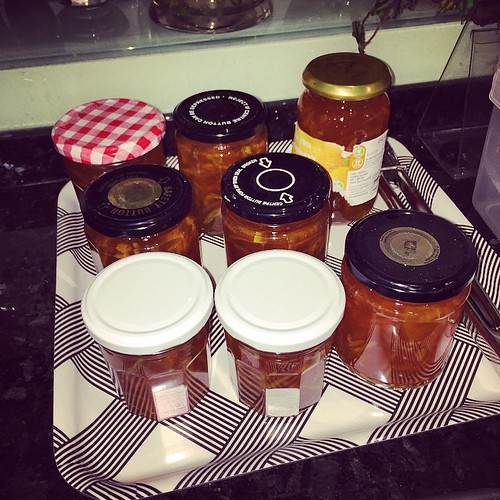
I really was just going to make a *small* batch of marmalade... Oops.

This has been a week of marmalade. I set out to made this ‘Good morning’ breakfast marmalade recipe with some blood oranges that were lurking in the fridge, along with lemons and a pink grapefruit. Despite conscientious pectin extraction from the membranes, and boiling twice, it still hasn’t set (I suspect because I didn’t have the crucial Seville oranges). So now I need some good recipes for marmalade syrup. These marmalade brownies are high up the list, as well as a marmalade and coconut bakewell tart from delicious magazine. I also plan to tackle some sort of marmalade granola (maybe this one). Next time, I’ll go back to my June Taylor recipes, even if she does make you segment all the fruit.

Recipes this week:

Without a recipe:

  • Spice Tailor Keralan coconut curry with fish, peas and sweet potato
  • Leftover braised beef ragu over pasta
  • Tomato sauce and Grandma Turano’s meatballs from the freezer
  • Burritos with black beans, avocado and grilled chicken

Reading:

Genius recipes – recipes that changed the way you cook

No-knead_bread

Food52 had an article some time ago about genius recipes, which links to a column they run and a forthcoming book. But it made me think, what are the recipes that I would consider genius – that once made, changed my perspective on that dish forever.

Marcella Hazan’s butter and tomato sauce came up a lot in that piece, and I’d endorse that too. I think I first came across it on Amateur Gourmet, but honestly, there came a point where it seemed to appear on every other blog, so I had to try it. The main revelation is knowing that you can make delicious good-enough-to-eat-with-a-spoon tomato sauce without sauteing or frying anything, and using tinned tomatoes.

I now roast broccoli and cauliflower fairly regularly in preference to boiling or steaming, but I think it was Heidi’s recipe for roasted cauliflower popcorn that first turned me on to this idea. Amateur Gourmet’s the best broccoli of your life was another endorsement for this approach. Sometimes I do something much simpler, and just coat the florets in a little oil before roasting, but I often add a sprinkling of vinegar too, and some breadcrumbs if I have them around. I think it was Jamie Oliver that first prompted me to add vinegar or citrus whenever roasting root vegetables, and now I do it routinely.

Jenny Rosenstrach from Dinner: A Love Story is evangelical about her pork shoulder ragu – and with good reason. It was her solution to entertaining again after having kids. It requires very little preparation time and is endlessly rewarding. The ‘aha’ moment for me was realising that a lump of meat can be braised to the point of falling apart, and then shredded into its cooking liquid there and then. Yes, I had braised meat before, but either in cubes (which take ages to brown before you can get going) or in a large piece that was then sliced or shredded to serve as is, or the liquid needed to be chilled/skimmed/reduced before using. This one-pot dish just needs you to brown the pork on a few sides before adding onions, tomatoes, wine and herbs and sending the whole thing to the oven for four hours. The amount of meat is manageable for four people, or for two with leftovers through the week (many recipes for pork shoulder ask for the whole joint and feed 10-12).

Another obvious choice is Jim Lahey’s no-knead bread (I usually work from Clotilde’s metric translation). It has been posted and reposted (including here), but that recipe introduced a number of really useful home bread baking principles, which can be incorporated into other bread recipes and methods. The first was slow rising, by using a very small amount of yeast. A lot of bread recipes are geared to being done as fast as possible, and so use 10 or more grams of dried yeast to 500g flour. This recipe has a tiny 1/4 tsp of yeast and still gets a good rise. It is also a wet dough, but that doesn’t matter as you don’t knead it, so avoid the sticky mess that can result. And finally, it is baked in a preheated casserole or cast iron pot with a lid. This not only prevents the very wet dough from spreading out into a pancake in the oven, it also contains the steam created at the start of the cooking, giving a better crust.

Do you have your own genius recipes?

Friday food links – 30 Jan 2015

Porridge with cream

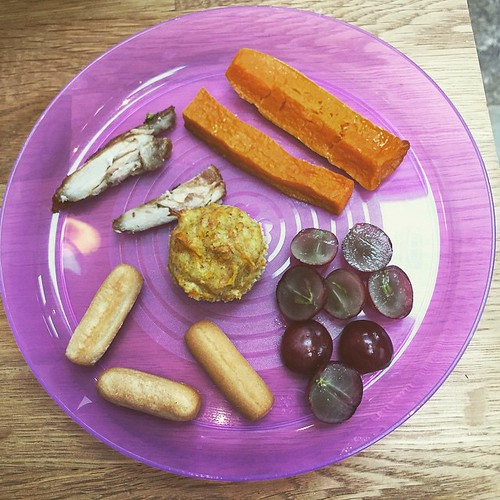
There has been a lot of simple without-a-recipe cooking this week, coinciding with a more concerted attempt to make proper meals for the little madam, as opposed to just assembling random bits on the fly. A roast chicken at the start of the week provided leftovers for two more meals, and the bones went into the freezer to make stock another day. It’s looking like it will be cold here this weekend, so I’m glad I’ve got some thick slices of beef shin in the fridge to braise slowly and shred into unctuous ragu.

Recipes:

Without a recipe:

  • Slow-roast chicken, roast potatoes in the same pan, broccoli and cauliflower cheese
  • Pasta with tomato sauce and chicken
  • Fried rice with chicken and vegetables
  • Sausages, potatoes and sweet potato, red onions roasted together
  • Fish parcels with sea bream, leeks and potatoes

Reading this week:

Friday food links – 23 Jan 2015

I hope she's hungry! #lifewithbaby

Winter is really here now. I think it took its time arriving, but there’s no real doubt now. Even in our sheltered corner, there’s thick frost on the ground each morning. I’m thankful there’s no snow though – we’re not equipped for it!

Recipes from this week:

Cooking without a recipe:

  • Chicken curry (Spice Tailor sauce) and dal
  • Pasta and sauce

And this week’s reading (which includes tidying up some old articles too):

Friday food links – 16 Jan 2014

First go with my @BakeryBits proving baskets, using @bakingjames Pain de Campagne recipe.
A bit of a bleak week – rain battering on the skylights at night, cold winds whistling around the pushchair in the day. Highlights included a first run with my proving baskets from Bakery Bits (above), and some nice veg-centred cooking, including soup, roast vegetable salad, and tacos.

Recipes:

This week’s reading:

Friday food links – 9 Jan 2015

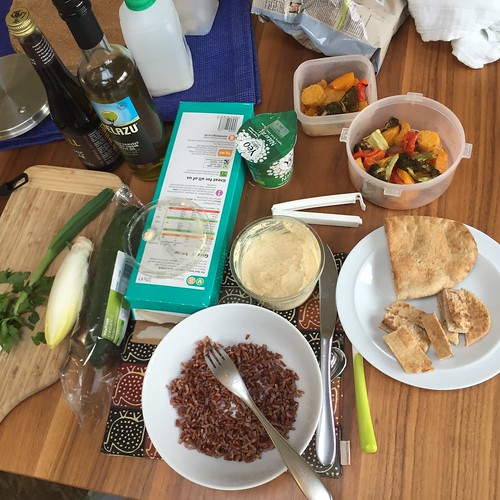
Lunch prep

This week means back to normality – Other Half back to work, and baby and I return to our classes and what passes for a routine around here. This weeks’s cooking has necessarily been a bit less ambitious than last week, when there was more help around. I’m starting to perfect the art of a dinner that I can get started while her Dad settles her, and that will coast to a finish without me when I tag in.
Some of the things we’ve been eating in the last two weeks include:

Recipes:
Great Grandma Turano’s Meatballs from Dinner: A Love Story
Diana Henry, A Change of Appetite – Tarka Dal
Sabrina Ghayour, Persiana– Spice-perfumed shoulder of lamb
Niamh Shields – pork & prawn patties
Nigella Lawson, How to Eat – roast topside of beef, eaten in sourdough sandwiches
David Tanis, One Good Dish – Very green fish stew
New York Times – Cabbage & potato gratin

Without a recipe:
Risotto with grilled chicken & roasted veg
Burrito bowl with rice, black beans, sweetcorn, avocado and leftover beef.
Onion pilaf
Mushroom & pancetta pasta
Endive, orange & walnut salad

Baking:
Batch of Green Kitchen Stories Banana granola
Using up the last of the mincemeat with Poires au Chocolat Mincemeat Squares

In other reading:

How to add crunch with crumbs and crumbles

A delicious meal has a balance of flavours, some element of contrast between the sweet, salty, sour and bitter; a sharp sauce to cut a rich meat, or a little sugar to enhance the savoury flavour of a tomato sauce. In the same way, contrasts in texture make a meal more interesting, and gives the mouth something more interesting to encounter. Texture is our sense of touch applied to food – the pressure on our teeth and tongue, the heat generated by spices, the silky feel of fat or the sparkle of bubbles.

A simple way to add another texture dimension to a dish is to add a layer of crunchy topping to it. Crumbles, granola, streusel, and breadcrumbs are all ways to provide a contrasting texture to an otherwise smooth dish. The crunch can come from toasting and drying bread, from the crisping of fat mixed with flour, from caramelising sugar, and from the built-in crunch of nuts.

Here are a few different ways to add crunch that can be prepared well in advance and stored for when you need a bit of extra texture for your dish.

Breadcrumbs

Leftover and staling bread can be turned easily into breadcrumbs with a food processor or a blender(if you have quite dry bread). Stashing these in the freezer is helpful for making meatballs, gratin toppings or crumbing meat or fish for frying, but you can amplify their uses by doing a bit of additional work first.

You could simply toast the crumbs in oil or butter, getting them brown & crunchy before going into a freezer bag. This makes for extra-crunchy pasta bakes or gratins, or can be used as a pasta topping in its own right. Ruth Reichl (former editor of Gourmet magazine) thinks they are so useful they could be considered a Christmas gift.

Another option is to mix in some flavourings as you grind the bread to crumbs. Parsley, garlic and parmesan make for a green-tinged, intensely flavourful batch of breadcrumbs. Use them to top pieces of chicken or fish before baking in the oven, or add to minced meat with an egg for deeply flavoured meatballs.

Dukkah

Dukkah

Dukkah is an Egyptian nut and spice mix used to dip bread into. It has been popular in New Zealand and Australia for years, and as Middle Eastern food grows in prominence with the Ottolenghi effect, you see it here more often too. There are a range of different recipes and spice blends that can be used. Hazelnuts are used most often as the chopped nuts base, but you can also use almonds, cashews or pistachios, or a mixture. Once made, you can add this as a crunchy topping to a dip, as Ottolenghi does with this butter bean puree, or top soups or casseroles with it for last-minute flavour and crunch. Diana Henry’s new book ‘A Change of Appetite’ has a recipe for roast tomatoes and lentils with dukkah-crumbed eggs, which contrasts the dukkah with the soft, yielding tomatoes and egg yolks.

Granola

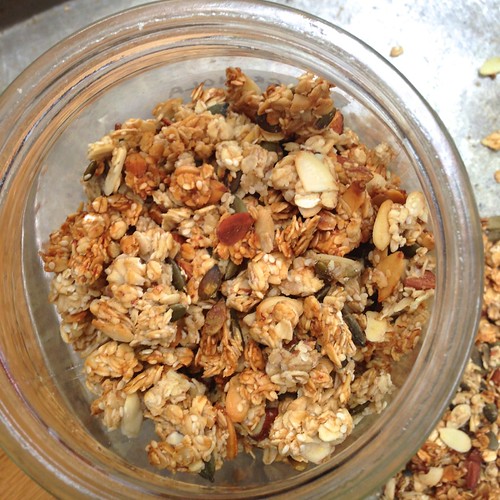
Banana granola in the jar

Granola is generally offered as a standalone choice with milk or yoghurt, but I prefer to use it as a crunchy topping to a bowl of cereal and muesli. This adds a nice contrast, but also means the dose of syrup and costly nuts per serving is reduced. Because with granola, you have to face the idea that it’s really just flapjack with a bit less syrup and a few more oats. A batch of granola can equally become a topping for cereal or yoghurt at breakfast, ice-cream for dessert, or make it into granola bars.

The crunch comes from toasting the oats and nuts in fat, but also from the caramelisation of the syrup or honey. One way to reduce the fat and sugar is to use some pureed fruit, but then more toasting is needed to thoroughly dry out the oat mix. My three favourite granola recipes:

Crumble topping

Strawberry crumble bars from @KimBoyceBakes recipe - using my homemade jam

The ideal contrast to a dish of soft cooked fruit, the recipe for crumble can provoke disagreement. Much of this is based in nostalgia for whichever crumble you had as a child, at home or school. As the American name, crisp, suggests, a crumble topping needs to have crunch. This is created by either rubbing roughly equal quantities of fat into the flour, or mixing in melted butter. Additional texture can be added with nuts and oats. Streusel toppings are along the same lines, often with more sugar, and can be used on top of a jam and shortbread base to make crumble bars.

 Further reading: