Roasting chicken and salting meat

Roast chicken with vegetables

I’m thinking of a gloomy grey Sunday. Rain pattering on the skylights in the kitchen. The Viburnum outside the window scratching back and forth. The distant rumble of the motorway carrying on the wind. It was the last day of the Christmas holidays, the eve of work beginning again. It felt like a good day to put a roast on the table.

For me, a Sunday roast means dinner, not lunch – prepared in the afternoon and eaten about 6 or 7pm. That was how it always was at home. Sunday afternoons meant mum in the kitchen, making dinner. Gran peeling vegetables and doing the ironing. Dad would probably be in the garden, or engaged in some DIY task. The veg would be peeled and put into a dish of water. The main might be roast chicken, often done in my mum’s old enamel roasting tin, which had a lid with dimples on. It could be roast beef, with slivers of garlic studded into the meat. A leg of lamb was my mum’s favourite, served with jellied mint sauce. But I think it’s the smell of roasting chicken that’s the most evocative. The scent of crisping skin and sizzling fat permeating the kitchen. Steam from the vegetables fogging the windows.

When I roast a chicken, I have a few different approaches I use, none of them very complicated. I might follow Laurie Colwin and sprinkle the top with paprika. I might scent it with a pierced lemon, approximating Marcella Hazan or Nigella Lawson. Or I might use herbs and onion in the cavity. But always, I will sprinkle the whole thing inside and out with salt. And if possible, I’ll do this a few hours before putting it into the oven.

Judy Rodgers’ ‘Zuni Cafe Cookbook’ is probably the best expression of salting a chicken in advance. Her roast chicken bread salad is hard to beat, but it does require a small chicken, and salting a good two days ahead. But why salt in advance at all?

Roast chicken with salty skin

Behind the recipe: salting meat

Recipes for roasting or braising meat often ask you to add salt to it some way in advance of cooking. This might be in the form of a rub or marinade, or just a sprinkling on the surface either a little or a lot of time before it goes into the oven or pot. What is the point of doing this, and is there any advantage to doing it a long way in advance?

Cookbooks will often describe salting in advance ‘to draw out the juices’, especially from cuts like steak and chops. Yes, salting will do this, through a relatively simple process of osmosis, where the concentrated salt on the outside persuades water to come out of the meat cells to dilute it, making the salt concentration more similar to that on the inside of the cells. However, this isn’t the only thing that happens.

As water is drawn out, salt is drawn in, to balance the concentrations. This extra salt inside the meat attacks some of the proteins, breaking them up, and making the solution of salt + protein in the meat more concentrated than the now more dilute brine on the outside.

So now the operation works in reverse, drawing water back in from the outside. So we have both salt and water being drawn into the meat. This doesn’t really change the weight of the meat – the juices being drawn back in came out of it in the first place, and not all of them will go back. But now extra salt has been added to the meat, and the proteins have also been damaged a bit, making the meat a bit more tender, and also less able to squeeze out juices during cooking, as the proteins cook and contract.

Osmosis is not a very fast process, so the further in advance you add the salt, the more likely this is to happen and to penetrate deeper into the meat. Do it too far ahead, or with too much salt and the meat will become overly salty and unpleasant, or the proteins will become too damaged and be dry when cooked.

When it comes to roast chicken (and also to other cuts with the skin, such as pork with crackling) the other benefit is in drying and seasoning the skin. By helping to create a dry surface to the skin, it makes it easier to get the surface temperature hot enough to crisp the skin. When there is water there, the temperature is limited to around 100C, but as soon as all the water is driven off, where there is fat in or under the skin, the temperature can go up and up, which allows the skin to crisp and crackle.

Further reading:

Serious Eats: the truth about brining turkey and the burger lab: salting ground beef

The Zuni Cafe Cookbook – containing Judy Rodgers’ recipe for roast chicken, and lots of other discussion about brining and salting meat in advance.
Smitten Kitchen has also written about the Zuni chicken.

Friday food links – 13 Feb 2015

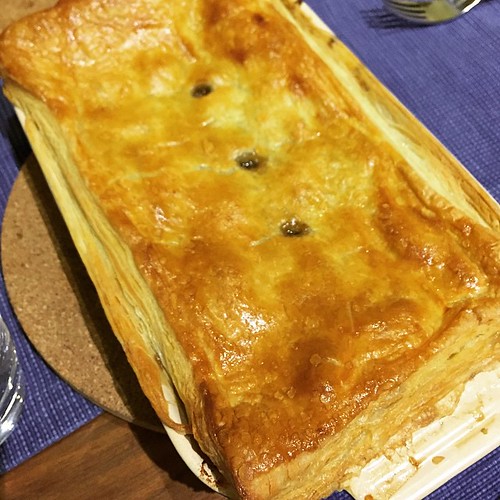
Cow pie for dinner. @RosieRamsden recipe, @breadahead puff pastry.

Excited to have got my hands on the new James Morton book, ‘How Baking Works‘. This feels like the book I should have written, so very interested to see what he has to say. I also cleared out my cupboards a bit (with a little help from my mum) and unearthed an ancient tin of condensed milk (which can’t go off, right?). This prompted me to make a Dan Lepard chocolate cake, and a tin of no-boil fudge. Unfortunately, the oven decided to break while I was baking the cake, meaning I baked it for twice as long as I should have, the first stint at a very low temperature. So I’ve ended up with something much drier than it should be, and singed around the edges for good measure. It’s a testament to Dan’s recipe that it tastes good nonetheless.

Recipes:

Without a recipe:

  • Sausage pasta
  • Chicken burritos
  • Parsnip risotto (from the freezer)
  • Fish curry (with Spice Tailor sauce)

Reading this week:

Friday food links – 30 Jan 2015

Porridge with cream

There has been a lot of simple without-a-recipe cooking this week, coinciding with a more concerted attempt to make proper meals for the little madam, as opposed to just assembling random bits on the fly. A roast chicken at the start of the week provided leftovers for two more meals, and the bones went into the freezer to make stock another day. It’s looking like it will be cold here this weekend, so I’m glad I’ve got some thick slices of beef shin in the fridge to braise slowly and shred into unctuous ragu.

Recipes:

Without a recipe:

  • Slow-roast chicken, roast potatoes in the same pan, broccoli and cauliflower cheese
  • Pasta with tomato sauce and chicken
  • Fried rice with chicken and vegetables
  • Sausages, potatoes and sweet potato, red onions roasted together
  • Fish parcels with sea bream, leeks and potatoes

Reading this week:

Friday food links – 24 Oct 2014

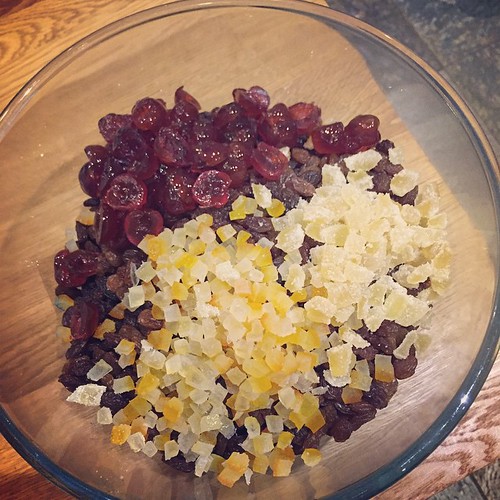
Christmas cake fruit is ready for brandy #lifewithbaby #naptime

Starting to look forward to winter now (and even countenancing the C-word – I made my Christmas cake last weekend).

Finally, my little girl is six months old today. Happy half-birthday, my gorgeous girl. It’s been so much fun getting to know you – I can’t wait for all the adventures we’ll have in the next six months.

E is six months old.

Cake baking – more cake foundations

In the last post, I looked in detail at creaming the butter and sugar, the starting point for many cakes. This post follows what happens next – adding the eggs, flour and then baking.

Fairy cake inside

I found a great description of what happens in a cake in Rose Levy Berenbaum’s Cake Bible:

“Ingredients fall into two categories: those that form and strengthen the cake structure and those that weaken it”.

The flour and eggs provide the protein that holds the cake structure up, and stop it from collapsing into a pancake. The fat, sugar and leavening all weaken the structure in different ways, making the cake tender and soft instead of tough and chewy. The balance between the two sides is important for capturing the air that makes cakes soft and light.

Adding eggs – what happens when it curdles

Almost as soon as I put the last post up, someone asked what happens if the mixture curdles. I have looked into this problem before – most people seem to say it can be avoided, perhaps marginally reduces the volume of the final cake, but if it does happen, you can carry on without problems.

But what was unclear was what caused it to curdle in the first place – was it really not enough creaming, or something else?

Curdled mixture with eggs

When the mixture curdles, what you see appearing are lumps of fat and sugar, surrounded by a thin watery liquid. The clearest explanation I found came from Shirley Corriher in ‘Bakewise’. She describes this as a:

“switch from the the water-in-oil emulsion that you want to an oil-in-water emulsion”.

This probably only makes sense if you know what an emulsion is. An emulsion is simply one liquid suspended in another. In this case, when you start to add the eggs, you are aiming for little droplets of the water from the eggs, suspended through the fat-and-sugar mixture that is already there. At some point, the liquid from the eggs can overwhelm the amount of fat, causing the bubbles of water to all join up and become the main part of the mixture – the continuous phase, as it’s called.

To prevent this happening, you need to ensure that the fat and sugar are able to hold as much liquid as possible – which means soft, but not melted. You also need to add the egg very gradually, so that it doesn’t overwhelm the mixture. This is the same principle as adding oil to mayonnaise – go slowly and incorporate each bit before you add some more.

Finally, the solution once it has curdled – which it might well do – is to stop beating it and add some flour. This will absorb the excess liquid that’s starting to pool, and shift the balance back again.

With flour added

Speaking of Shirley Corriher, this is a brilliant excuse to link to my favourite food science programme, Good Eats:
Good Eats: A Cake on Every Plate

Shirley appears at about 4m30 (disturbingly extolling the virtues of cake flour, which you can’t get in the UK because it’s chlorinated, and the EU aren’t big fans of that idea).
Alton also talks about creaming and bubbles at about 8m30. He also has kick-ass flames painted onto his KitchenAid mixer.

Adding flour

Once the eggs are in, the final step is to add the flour, and any liquid that might be called for. These are often added in alternate batches, so that the mixture gets neither too stiff nor too runny as they go in – either might deflate the air.

An often neglected step is to thoroughly sift the flour and baking powder together. This isn’t necessary if using self-raising flour, but when adding baking powder, there is always the risk that small lumps of leavener will persist in the batter, and produce large ugly holes in the final cake. If you really want a fine texture, sift two or three times before it goes into the batter.

The other important thing when you add the flour is to stop folding or stirring as soon as the flour has disappeared into the mixture – don’t mix any more than you need to. As soon as the flour makes contact with the liquid in the eggs, and any added liquid like milk, it will start to make gluten. The more you mix at this point, the longer and stronger the gluten will become, and the tougher your cake will be.

Baking

The final point is on baking. The balance here is between allowing the leavener time to work and expand, and setting the egg and flour proteins in a structure that will hold the air. Bake at too high a heat, and the leavener might not have had time to work before the batter sets, making a more dense cake with a closer texture. Bake at too low a temperature, and the gas might bubble to the surface and disperse, and so be lost that way. A medium temperature will set the batter at the right point, and bake through evenly without making the surface too dark and brown.

An alternative method – the two stage approach

When consulting Rose Levy Berenbaum, I discovered that she actually doesn’t recommend creaming at all. Her favoured approach is a different one completely. She combines the flour, sugar and fat together with a little egg, and beats thoroughly to incorporate air. Then she adds the remainder of the egg, and other liquid in batches.

This approach takes a different route to the issues above. By combining the fat directly with the flour, it can be coated to prevent the liquid getting at the protein and forming gluten. The flour-sugar-fat mixture can still hold air, so the creaming still generates volume. And the eggs are added only once the flour is already there to absorb liquid, so there is no risk of curdling.

I haven’t tried this approach more than once or twice, but I will be trying it out alongside regular creaming to see what effect it has. Watch this space.