Friday food links – 19 Feb 2016 – and a homemade pizza recipe

Gorgeous but freezing run this morning

It has been a real where-did-the-week-go week.  My kitchen saviours have been the freezer and the oven timer. From the freezer came a container of Chinese-flavoured braised pork, which made the most of a vegetable fried rice. Also from the freezer, I dredged up a container of beef stew, which was mostly mushrooms and shallots in rich gravy. Some boiled potatoes and wilted cabbage were all that was needed there. And then Tuesday was a pasta bake with cheese sauce, some scraps of broccoli, spinach and spring onion and pancetta, which also did duty as leftovers last night. I made the sauce and cooked the pasta and veg in the afternoon when E was occupied, and put it into the oven with the timer set so it switched on with a delay, and was ready 15 minutes before we were sitting down to eat.

Recipes:

  • Homemade pizza – see recipe below
  • Leek and potato soup in the Thermomix
  • Two ingredient microwave chocolate pudding – from Stephen Harris (a bit dark when made with 70% chocolate, but would be good with something milder).
  • Slow cooker caramelised onions – from Slow Cooked

Without a recipe:

  • Beef stew from the freezer, with boiled potatoes and savoy cabbage
  • Fried rice with chinese pork
  • Cheesy pasta bake with pancetta, broccoli, spinach and spring onion.
  • Fish and oven chips

Reading:

Recipe: Homemade Pizza

Homemade pizza

I have tried any number of ways of making pizza at home, but my oven doesn’t really get anything like hot enough to attempt to replicate a real pizza oven, so I’ve gradually adjusted to the idea that homemade pizza is rather like oven chips – still good, but not what you’d get in a restaurant.

This means I have come around to a process that is as low effort as possible, but still produces something tasty with a crust that’s fairly thin and crisp on the edges and base. This is largely inspired by Smitten Kitchen’s approach in her cookbook.

The most important step is stretching the dough. Each time you stretch and work the gluten, it gets springy and wants to contract back. So stretching and shaping is best done in gradual stages, letting the dough relax in between. This makes it easier to get the dough really big and thin.

The other trick is to do the stretching on the baking sheet you use to bake it. You will lose something by not putting it directly onto a hot surface, but I think that’s outweighed by the ease of not having to slide the dough around.


Dough:

  • 300g strong white flour
  • 1 tsp dried yeast
  • 1 tsp sea salt
  • 180g water
  • 1 tbsp olive oil

Toppings:

  • small box of passata
  • 1 packet pre-grated mozzarella
  • 1 pack fresh mozzarella
  • toppings

Prepare the dough a couple of hours before you want to have dinner. Alternatively, you can prepare it the night before, and put it in the fridge. In that case, it helps to get it out of the fridge a bit before you want to bake with it.

Weigh out the flour and add the yeast and salt. Mix briefly together, and then add the water and oil. Stir everything together, or use a mixer with a dough hook.

Then knead everything for about 5 minutes, either by hand or in the mixer. Try not to add any extra flour. You can also use a food processor, with brief pulses.

Put the dough into an oiled bowl and cover with cling film. Leave at room temperature to rise (it doesn’t need to be somewhere warm).

When you are ready to bake, preheat the oven to 250C or as hot as you can get it – my highest temperature is 220C in a fan oven.

Divide the dough into two pieces, and shape into balls. Pat the dough out into a rough rectangle or oval, or use a rolling pin. Do this in stages, leaving the dough to rest for at least 5 minutes under a tea towel before trying to roll or stretch the dough again. This helps to get it really thin without breaking it or having it spring back.

Sprinkle a large baking sheet with cornmeal/polenta or semolina, or line it with baking parchment. Put the dough onto the sheet, and stretch the edges again to fill the sheet as much as you can.

Top the pizza with passata or tomato sauce, cheese and any other toppings. Bake at 220C for 10 minutes, until the edges are lightly browned, and the cheese is melted and bubbling.

Leave to stand for a couple of minutes before cutting into pieces.

Friday food links – 12 Feb 2016

Camellia in the gutter. A casualty of yesterday's storm, a sign of spring.

This week has been powered by a big joint of pork shoulder that my mum slow-cooked on Saturday. It has been served with baked potatoes, in burrito bowls and in tortillas. It would have made it into pasta too if I’d remembered. I also made some freezer supplies for E: muffins to toast and banana date cakes. As it’s been a long time since a recipe featured anywhere on here, I’ve included the recipe for these below.

Recipes:

Without a recipe:

  • Pulled pork
  • Pasta with red peppers and mushrooms
  • Pork and black bean burritos
  • Pork burrito bowls
  • Slow cooker chicken curry
  • Carrot and sweet potato soup

Reading:

A bit light on reading this week. I’ve been working through Anne-Marie Slaughter’s ‘Unfinished Business’, on the challenge of the work-life balance and the low value we place on care.

Banana date cakes

Recipe: Banana and Date cakes

Adapted from a banana cake in the Baby Led Weaning Cookbook, these little cakes have no sugar, but are still sweet from the bananas and dates, especially if you use really ripe bananas. They make great toddler food, or a good breakfast or mid-morning snack.

  • 100g self-raising wholemeal flour
  • 1/2 tsp mixed spice
  • 50g unsalted butter
  • 2 very ripe bananas (200g peeled)
  • 1 egg
  • 75g dates

Prepare a muffin tin by greasing or with paper cases. Preheat the oven to 180C/160C fan.

Chop the dates. If they are somewhat dry, cover with hot water and leave to soak for about 10 minutes. Drain and set aside.

Rub the butter into the flour. Stir in the mixed spice.

In another bowl, mash the bananas and mix in the egg. Add to the flour with the drained, chopped dates and mix everything together.

Spoon into cupcake or muffin cases and bake for 15 – 20 minutes.

Behind the recipe: How to make Christmas cake

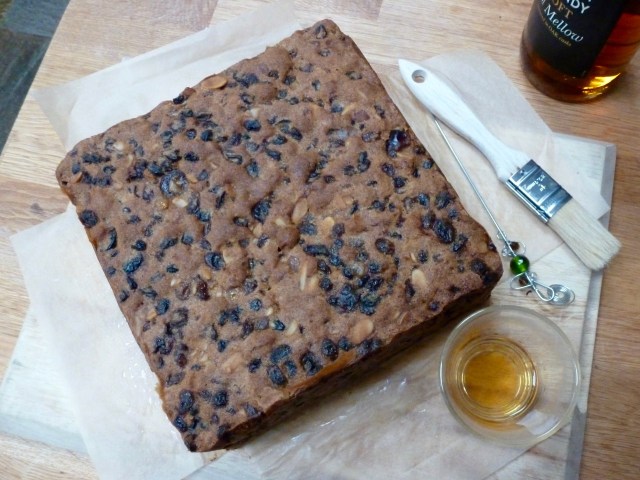
P1000568

A couple of weeks ago I made this year’s Christmas cake. I make my husband’s grandmother’s recipe, although, much to his horror, I do make some adjustments here and there. But it produces a fruit-packed dark cake that we both love, so it always seems worth it. And more than ever now we are a family of three, I enjoy the ritual of digging out the fruit in October, and making the cake, knowing that it promises cosy evenings and feasting to come in a couple of months. Even when all my good intentions of early Christmas shopping and house decorating come to nought, I feel comforted knowing that at least I have a cake stored away, that will make tea times feel festive.

Shauna from Gluten Free Girl wrote a lovely post earlier this year about the ritual of making the same food each week, of having a pattern to the week that everyone recognises. I feel the same way about these annual rituals of cooking. There is great comfort in a cooking ritual that evokes a specific time of year: marmalade in January, strawberries in June. But for a Brit, Christmas is the one time of year that we celebrate with specific festive foods. Americans have Thanksgiving, the Fourth of July, the Super Bowl to mark their cooking year. With Hot Cross Buns seemingly available all year round, Christmas is the last food feast in the calendar, even if it does seem to start in September.

When making a fruit cake for Christmas, there are certain rituals to the process that seem arcane. It seems to be a very complicated recipe, and it’s tempting to shortcut as many steps as possible. But why is the process so peculiar, compared to baking a straightforward sponge cake?

The main thing to remember about fruitcake is that it is (or should be) more fruit than cake. And dried fruit needs a few things to bake well: to be moist enough not to dry out; to be cooked slowly so that all the sugar in it doesn’t scorch; and to be suspended in a cake batter firm enough so that it doesn’t all sink to the bottom when baked. Here are some of the steps you might find in your Christmas cake or fruit cake recipe, and why they are worth doing:

Soaking the fruit

Many recipes start with measuring the fruit, and soaking it overnight (or for even longer). This plumps up fruit like raisins and currants, and the liquid they take in here will help keep the cake moist as it sits. And if you soak in brandy, rum, whisky or another spirit, it will also help to preserve the cake.

Wrapping the tin in brown paper

Using all my Blue Peter skills on the cake tin for the fruit cake

This is what really says Christmas to me. The idea when lining the tin with multiple layers of paper, and then wrapping newspaper or brown paper around the outside is to insulate the tin, and prevent the outside from browning, and ultimately scorching, before the centre of this dense cake is cooked through. You may also be asked to cover the top with paper, to prevent it browning too far.

Brushing/soaking with brandy/rum

This one definitely depends on how far in advance you’ve made it, and how often you remember to do this. It should serve two purposes – to help keep the crumb moist, and to further preserve the cake, and prevent any mould from forming. You should also make sure you wrap the cake well each time you do this, so that the moisture is kept in.

Wrapping in marzipan

So it’s been baked, and soaked, and wrapped, and it’s nearly Christmas. Just time to ice it. But first you have to cover it in marzipan and then let it dry out?? This is really a royal icing thing. The marzipan is there to stop the dark fruit of the cake from bleeding through the pristine white icing. And letting it dry out prevents oils from the almonds from leaking into the icing.

I’m not a huge fan of royal icing, or of shop-bought marzipan that is so sweet it makes your teeth ache. But I could be persuaded by Nigel Slater’s homemade almond paste with orange zest, and golden icing sugar icing.

Here is the recipe I use. The dried fruit can be varied, as long as you keep to the same weight. I like to keep a base of raisins and currants for their dark, rich flavours, but you may prefer paler, sweeter fruits: sultanas, figs and apricots chopped small, dried cherries. I have to confess that I no longer whisk the egg whites separately – I just couldn’t see how the air would survive folding in with the fruit. Instead I mix the whole eggs into the creamed butter and sugar. 

Recipe: Pendleton Christmas Cake

PREP TIME: 1 hr plus soaking

TOTAL TIME: 5 – 6 hr

This recipe – for 9 inch round tin (or 8 inch square) – 20cm square.

Ingredients:

  • 450 gram Raisins
  • 450 gram Sultanas
  • 340 gram Currants
  • 110 gram Candied Peel — finely chopped
  • 110 gram Glace Cherries — halved
  • 75 ml Brandy
  • 75ml orange juice
  • 110 gram Almonds, Blanched — shredded
  • 285 gram Flour, Plain
  • 1/2 tsp Salt
  • 1 tsp Ground Cinnamon
  • 1 tsp Mixed Spice
  • 1 pinch Nutmeg — grated
  • 225 gram Butter
  • 225 gram Sugar, Soft brown
  • 1 tbsp Black Treacle
  • 6 Eggs
  • 55 gram Plain Chocolate, melted
  • 1/2 tsp Bicarbonate of Soda
  • 1 tsp Warm water

Combine the fruit with the brandy and the orange juice. Leave to soak overnight.

Line tin with 2 thicknesses of baking parchment and tie a band of brown paper around the outside of tin that comes 2-3 inches above the rim.

Set oven at 300F/150C/130C fan or gas mark 3.

This recipe is in three parts: the cake mixture, the fruit, and the whisked egg whites. Each part gets a separate portion of the flour mixture until they are all combined at the end.

Sift flour, salt and spices together and divide into 3 portions. Mix one portion with the prepared fruit and nuts (especially coat the cherries well in flour).

Cream the butter in a mixer, or with a handheld mixer, then add the sugar and beat well until fairly light and fluffy (at least 3-4 minutes), then stir in black treacle. [To measure the black treacle, take the lid off the tin and stand it in hot water for a few minutes – this makes the treacle more liquid and easier to measure. Also, oil your measuring spoon with a little vegetable oil before scooping out the treacle- this will help the treacle to slide off the spoon]. Melt the chocolate in the microwave, or over a pan of gently simmering water. Stir in the melted chocolate.

Separate eggs, and whisk yolks together until slightly thickened, and add to butter mixture alternately with second portion of flour. Mix gently, so as not to overwork the flour and make the batter tough.

Fold the 1st portion of flour (mixed with fruit and nuts) into the cake mix.
Dissolve bicarbonate of soda in the warm water and stir gently into the mixture.

Whisk the egg whites until holding very soft peaks and fold into the cake mixture with the third and final portion of flour.

Turn cake mixture into prepared tin, smooth top with palette knife and brush with a little tepid water to keep cake soft while cooking. Put cake into oven and bake at least 3 and up to 4.5 hours. After the first hour, place a folded square of baking parchment on the top to reduce browning (this can go on from the beginning, but then tends to stick to the mixture).

When cake has been in the oven about 1.5 hours, turn cooker down to 290F (145C) or Mark 2. At the end of cooking time (or after about 3 hours) test with a skewer to see that it comes out clean with no batter clinging to it. Leave in tin to cool for 30 minutes then turn out carefully on to wire rack.

When cold wrap in several sheets of greaseproof paper and store in completely airtight tin. Store for at least one month. Will keep for a year or more. Cover with almond paste two weeks before needed and ice one week later.

More about making fruit cake, and some recipes:
BBC Food Fruit cake
Nigel Slater’s Christmas cake
Felicity Cloake on her perfect Christmas cake

Genius recipes – recipes that changed the way you cook

No-knead_bread

Food52 had an article some time ago about genius recipes, which links to a column they run and a forthcoming book. But it made me think, what are the recipes that I would consider genius – that once made, changed my perspective on that dish forever.

Marcella Hazan’s butter and tomato sauce came up a lot in that piece, and I’d endorse that too. I think I first came across it on Amateur Gourmet, but honestly, there came a point where it seemed to appear on every other blog, so I had to try it. The main revelation is knowing that you can make delicious good-enough-to-eat-with-a-spoon tomato sauce without sauteing or frying anything, and using tinned tomatoes.

I now roast broccoli and cauliflower fairly regularly in preference to boiling or steaming, but I think it was Heidi’s recipe for roasted cauliflower popcorn that first turned me on to this idea. Amateur Gourmet’s the best broccoli of your life was another endorsement for this approach. Sometimes I do something much simpler, and just coat the florets in a little oil before roasting, but I often add a sprinkling of vinegar too, and some breadcrumbs if I have them around. I think it was Jamie Oliver that first prompted me to add vinegar or citrus whenever roasting root vegetables, and now I do it routinely.

Jenny Rosenstrach from Dinner: A Love Story is evangelical about her pork shoulder ragu – and with good reason. It was her solution to entertaining again after having kids. It requires very little preparation time and is endlessly rewarding. The ‘aha’ moment for me was realising that a lump of meat can be braised to the point of falling apart, and then shredded into its cooking liquid there and then. Yes, I had braised meat before, but either in cubes (which take ages to brown before you can get going) or in a large piece that was then sliced or shredded to serve as is, or the liquid needed to be chilled/skimmed/reduced before using. This one-pot dish just needs you to brown the pork on a few sides before adding onions, tomatoes, wine and herbs and sending the whole thing to the oven for four hours. The amount of meat is manageable for four people, or for two with leftovers through the week (many recipes for pork shoulder ask for the whole joint and feed 10-12).

Another obvious choice is Jim Lahey’s no-knead bread (I usually work from Clotilde’s metric translation). It has been posted and reposted (including here), but that recipe introduced a number of really useful home bread baking principles, which can be incorporated into other bread recipes and methods. The first was slow rising, by using a very small amount of yeast. A lot of bread recipes are geared to being done as fast as possible, and so use 10 or more grams of dried yeast to 500g flour. This recipe has a tiny 1/4 tsp of yeast and still gets a good rise. It is also a wet dough, but that doesn’t matter as you don’t knead it, so avoid the sticky mess that can result. And finally, it is baked in a preheated casserole or cast iron pot with a lid. This not only prevents the very wet dough from spreading out into a pancake in the oven, it also contains the steam created at the start of the cooking, giving a better crust.

Do you have your own genius recipes?

Brown butter financiers or friands

Untitled

I sometimes come across this sort of silicone bakeware, and wonder what on earth it’s for (although if it’s as nice as this sunflower one, I don’t worry too much about that). But then I remember financiers. Financiers, or friands, are not something you often come across, but they are a great recipe to know about. Made with egg whites, melted butter, flour, sugar and ground nuts, they are moist little cakes that keep really well.

Financiers are from the French kitchen, and used to be baked in little gold-ingot like bars, which gave them the name. Traditionally, they would be made with brown butter and ground almonds – a rich and somewhat expensive combination which may account for the name. Friands are the antipodean version, less likely to include anything as fussy as brown butter, and more likely to be a carrier for raspberries, blueberries or other fruit flavours.

Another good reason to have a friand or financier recipe on hand is that they are a great way to use up leftover egg whites. Unlike macarons and other egg white recipes that use a meringue base, these don’t require the whites to be whisked to peaks. They only need a little whisking to break them up, and you can easily use 3, 4 or 5 egg whites for one batch of cakes (handy if you’ve been making ice-cream).

Untitled

Because of the melted butter and nuts, these are quite dense and rich little cakes, that are best baked in small tins. Friand tins are little oval shapes, but mini muffin tins are the perfect size, if you grease them well. You can also use silicon bakeware in lots of beautiful shapes, like this sunflower mould I picked up in Paris. This seems to cook them more evenly, although you also get less of the brown crust. When baked, the outside should be lightly browned, and when cool, just a little crisp. The interior will be rich and dense with the nuts.

They are a great thing to have on hand if you think you don’t want a proper dessert or cake, just something sweet to nibble with tea or coffee at the end of a meal, or as a pick-me-up in the middle of the afternoon.

For these sunflower cakes, I wanted to keep the mixture plain – no berries or other decorations, so that the shape of the sunflowers would show up nicely. Instead, I used the traditional French approach and made brown butter, which along with a little vanilla, formed the only flavouring. There will be more on alternative flavours for financiers in a forthcoming post.

Scroll down for more on what’s behind the recipe, including details on brown butter and the role of the egg whites.

Brown butter financiers

  • 150g brown butter
  • 165g egg whites(5)
  • 175g icing sugar
  • 50g plain flour
  • 100g ground almonds
  • 1 teaspoon vanilla extract

First make the brown butter, as directed below, and set aside to cool.
Preheat the oven to 200C/180C fan/400F and thoroughly butter your moulds or tins.
Whisk the egg whites gently to loosen them, but not enough to create a froth. Sieve the icing sugar, flour and almonds onto the whites and stir together until combined.
When the butter has cooled but is still liquid, add to the mixture and fold together gently until completely combined and homogenous. If you like, add some vanilla extract or a drop or two of almond extract.

Untitled
At this stage, you can refrigerate the mixture overnight or for a few days, until you are ready to bake.
Fill the moulds about 80% full, and bake for 8–12 minutes. The timing will depend on the tins you are using – both the material and the size. They are ready when cooked through – test with a skewer – and with toasted brown edges.
Leave to cool for 5–10 minutes and then turn out of the tin while still warm. If using metal tins, you may need to use a knife to ease the cakes away from the sides. Eat the same day if possible – although they will keep for several days in a tin, the texture won’t be quite as good, and you won’t get the same contrast between crisp edge and soft, dense interior.

What’s behind the recipe?

Brown butter

Untitled
Brown butter is what happens when you cook butter until the water has all evaporated and the temperature rises high enough to toast the milk solids in the fat. This produces a little bit of brown sludge at the bottom of the pan, and a lovely toasty, nutty flavour in the butter. It’s sometimes called beurre noisette, and used as a sauce in some dishes of French cookery.

You may have made brown butter accidentally before, by putting butter into a too-hot pan, and seeing the little brown grains appear. Brown butter, made deliberately, is usually done in a small saucepan, of pale metal so that you can see the browning, with a larger quantity of butter. Melt the butter over a moderate heat.

Once the butter is gets close to 100C the water in the butter will start to boil (about 15% of butter is water, depending on the brand you use). Let this bubbling continue. When the water has all gone, it will stop bubbling, and go quiet. This is when you need to pay close attention, and probably stir occasionally. The milk solids – those white, milky parts that appear when you melt butter – will sink to the bottom of the pan and be the first to brown, so you need to scrape them off and stir them about to make sure nothing burns. You might also start to get a foam on the top of the butter. Once the solids at the bottom are a nice nut-brown, and the whole thing smells nutty, remove it from the heat and pour the whole thing into a heatproof bowl or measuring jug. This will help to stop the cooking and make sure it doesn’t brown any further and start to burn. Most recipes using brown butter, including financiers, will need the butter to be cooled – it will be extremely hot when it comes out of the pan.

Why whisk the egg whites if you’re not going to form peaks?

Financiers don’t need the aeration you get from an egg white whisked into snowy peaks, but the recipes often ask you to whisk them a little. Why? The proteins in egg white attach to each other very well, which is why a really fresh egg broken onto a plate will ‘sit up’, and why it’s so hard to divide an egg white in half, if you’ve ever tried to do that. Whisking the whites just a little helps to break apart the proteins and loosen the whole thing up. This makes it much easier to mix in the other ingredients.

Why do financiers only have egg whites in?

Financiers are a puzzle to me. Here is a little tender cake, that doesn’t have any baking powder in, and doesn’t whisk air in through creaming or whisked egg whites. So what makes it rise instead of being a flat pancake?

My best guess is that the egg whites provide a stretchy protein structure, so that when the water and fat in the recipe heats up, and steam is released, the stretchy egg proteins are there to capture it and keep the bubbles in the final cake. There is very little flour in the recipe, so the egg white proteins are likely to be contributing most of the structure that holds the cake together. Ordinarily, egg whites create quite dry, crisp things, but all those nuts and butter keep things rich here.

Some other great friand recipes:

What’s missing from a recipe

Last week I made pistachio gelato (post coming soon), a type of recipe I had not tried before. It frustrated me because it included guidance to remove from the heat “when the mixture approaches a simmer”, but no explanation of why this specific heat was needed, nor what would happen if you let it actually simmer. I like to know why I am doing what I’m doing, and in this case, the information was missing.

This is a subject that has been occupying me for some time. The current standard format for recipes was developed during the 19th Century by domestic cookery writers like Eliza Acton and Isabella Beeton. They were the first to write a separate list of ingredients, followed by the method. Before that, the instructions would be very brief, intended as a reminder for those who had already learnt about cooking from their mother or as an apprentice to a cook.

So Hannah Glasse, writing The Art of Cookery, Made Plain and Easy in 1774, could write this recipe for tart pastry:

One pound of flour, three quarters of a pound of butter; mix up together and beat well with a rolling pin.

Recipes like this were never intended to be a replacement for the teaching of cookery. They are still a very limited format. However, they are a popular one, and virtually standardised over the past 100 years, so that most people recognise a recipe layout if they see one, and know what to expect. They also work fairly well as a compromise – something that can be reproduced easily in many different media, and something that strikes a balance between too much and too little information.

However, as a teaching tool for learning to cook they definitely err on the side of too little information. Worse, because they form the main body of most cookbooks, it would be natural for those learning to cook from a book that everything you need to know would be contained in them. This is very far from the case.

It is hard to find information on which parts of the recipe are important, and which are more flexible. Where is it safe to deviate and where is it not? To compound the problem, few experienced cooks know which parts of a recipe are most important to follow. If you always follow recipes, how would you know what happens if you don’t? Or how to fix it if the recipe turns out to be wrong?

What is missing from most recipes is the context-sensitive techniques that allow you to exert your own judgement about the recipe. The understanding you need to decide if something is done, if it has gone wrong or if you should add more or less of something. By implying that the recipe contains everything, we remove people’s capability to make the adaptations that are always necessary, because the circumstances in which we cook are always unique.

In the next few posts, I am going to try and pick out the parts of a recipe that are missing, the bits to pay attention to, and those you can be more relaxed about. Hopefully, this sort of information can then be applied to any similar recipe you come across, rather than being specific to the one you’re looking at. And that sort of knowledge should be more enduring.

Food magazines

You wait all month and then three come along at once.

Delicious, Waitrose Kitchen and Bon Appetit food magazines

My food magazines all turned up together this month. I try not to overindulge in these things – too often they are full of recipes I don’t want to make, and concerns I don’t care about – feeding children, losing weight. Not that there’s anything wrong with those, they’re just not my concern. But sometimes I get a lot out of them, and more so when I mark up the interesting things so I can go back later when I need inspiration. So here are the things I’ve marked to try and make sometime soon.

Bon Appetit, March 2011

I subscribe to Bon Appetit, so it’s delivered to me from the US – otherwise it is pretty hard to find in the UK. It’s not as good as the discontinued Gourmet was, but I still enjoy hearing about things on the other side of the Atlantic, and it has a good mix of columns and recipes.

  • Clotilde Dusoulier (of Paris blog Chocolate and Zucchini) has a ‘snob-free’ guide to Paris in this issue. I’m planning a trip there soon – it’s been ages since I last went and it’s just 2 and a half hours away from the centre of London. It takes longer to get to Yorkshire.
  • Lemongrass bars with coconut shortbread crust sound like an interesting twist on classic lemon bars.
  • In a Baked pasta special, the best sounding is ‘Rigatoni with eggplant and pine nut crunch’. Roasted vegetables are mixed with pasta and tomato sauce, topped with a rough pesto and lots of cheese, and baked. Yum.
  • Sticky Toffee Banana pudding, in a section on desserts from the pantry. I’ve been thinking about warm desserts that you could freeze in individual portions and reheat, and this would fit the bill.

Waitrose Kitchen, March 2011

What used to be Waitrose Food Illustrated has become Waitrose Kitchen. Unfortunately, this has reduced the number of longer articles and more complicated recipes, with more ’30 minute meals’ content in there instead. Still, it’s a cut above most in-store magazines, and free if you have a John Lewis credit card.

  • Tamasin Day-Lewis, author of one of my favourite books, The Art Of The Tart, has a lovely looking meal of gammon, borlotti beans, potato cake and cabbage with Cashel Blue cheese. Although I probably won’t recreate the whole thing, the potato cake and beans may get used as side dishes.
  • Lamb, aubergine and tomato gratin – one of a pair of dishes, this is the rainy day counterpart to a ‘sunny day’ lamb koftas (kebab) recipe. Sounds like a less heavy version of moussaka, with a crisp topping of breadcrumbs, parsley and lemon. Perfect when spring starts to appear, but hasn’t quite got here yet.

Delicious, April 2011

I don’t often buy Delicious, but when I’m in the mood for a food magazine that isn’t one of the above, it’s the preferred one. I saw @meemalee tweet about the cover article, a beautiful pyramid of marshmallows by @beas_bloomsbury, so thought this would be a good one, and it’s definitely the best of the bunch.

  • Nigella’s weekend menu – Duck, potatoes and butternut squash salad – loved the look of this, and made something similar on Sunday, but followed Mark Bittman’s directions for crisp braised duck legs.
  • A lovely looking Easter menu of rhubarb cocktails, salad of salmon, cucumber and avocado; slow-cooked shoulder of lamb with rice, salad; pavlova with passion fruit. Keen to try making the rhubarb syrup used for the cocktails, and trying to recreate the rhubarb gin and tonics they serve at the restaurant Bob Bob Ricard.
  • There’s a good food blogging article, featuring such illustrious names as Edd Kimber, blogging at he eats and Pim Techamuanvivit of Chez Pim. Nice to see a bit of mainstream coverage.
  • Amazing looking marshmallows in white, pink and green from Bea Vo of Bea’s of Bloomsbury tearooms. It’s not often that I encounter a recipe I’ve never seen before, but I had never come across a marshmallow recipe that didn’t feature egg whites. I am not a marshmallow-lover, but the description of these is tempting even me.

A few food-related links

The wonderful Shuna writes about the balance between Recipes and Intuition:

“I believe if one places the recipe before what one knows to be true, that’s where {some of the} trouble begins.
That’s when “Bad Things Happen.””

http://eggbeater.typepad.com/shuna/2009/10/recipes-vs-intuition.html

Autumn recipes for crisps (= UK crumble)

Pear Crisp from The Pioneer Woman

Breakfast Granola Apple Crisp from Smitten Kitchen

(both are on the to-bake list)

A lovely banana bread recipe from Sophie Dahl in Waitrose Food Illustrated which I adapted slightly here.

Some lovely friends bought me a gift subscription from The Spicery for my birthday, and I’m already enjoying it so much that I’ve ordered a stack of extra things from them – including beautiful long Cinnamon quills and really fragrant garam masala. Check out the recipe kits.

Buffet food

This is a special post in response to Sam’s heartfelt plea over at Becks & Posh. She wants recipe suggestions for her Mum to make for her own retirement party. As it happens, waaaaay back in February, I made a brunch buffet for a load of people, and the stand-out winner was the frittata. I wanted to make eggs (because you can’t really call it brunch unless I have eggs) but I also wanted as much of the buffet as possible to be done in advance. So I made a baked frittata, assembled from various sources (including an Australian Women’s Weekly book, and epicurious.com, if I remember rightly). It’s a very forgiving recipe that lends itself to including leftovers, and can be cut into as small pieces as you need.

Breakfast Frittata
To fill one 30cm x 21cm (roughly 8″ x 12″) tin, cut into 12 large triangles.

6-8 charlotte potatoes, boiled until tender & cooled
3 onions, halved and roasted in the over for around 1 hr until caramelised
1.5 – 2 cups frozen peas
120g crumbled lancashire cheese
8 eggs
284ml carton double cream
lots of salt & pepper

Chop the potatoes and onions into roughly pea-sized pieces. Crumble in the cheese. Beat the eggs in a separate bowl and pour over the vegetables with the cream. Mix around and pour into the foil-lined tin.
Bake at 140C for around 40 minutes, or until just set in the middle. (Keeping the temperature low helps keep the texture creamy).
Leave to cool, then store in the fridge. Unmould and cut into pieces while cold, then leave for an hour or so to come to room temperature before serving.